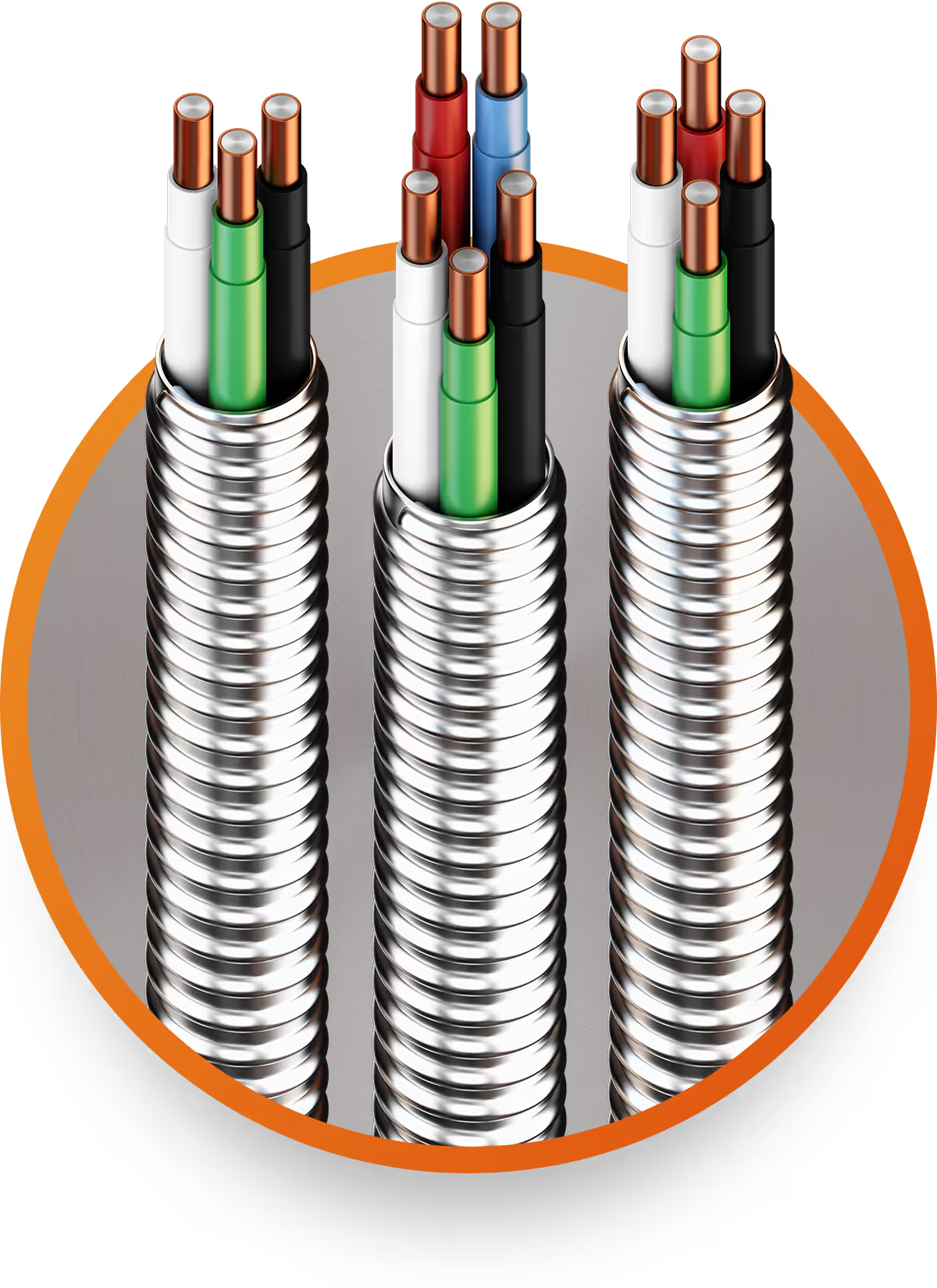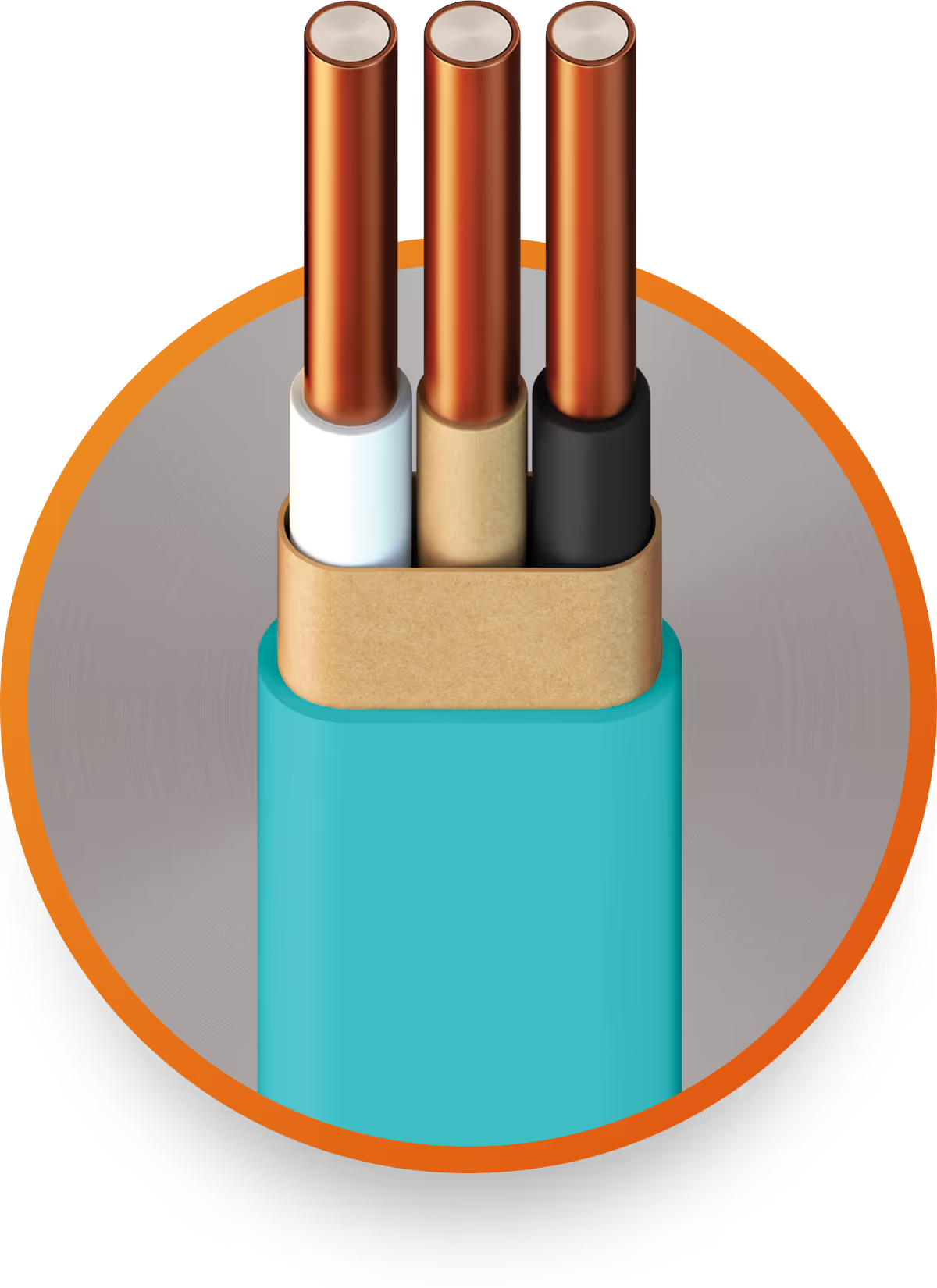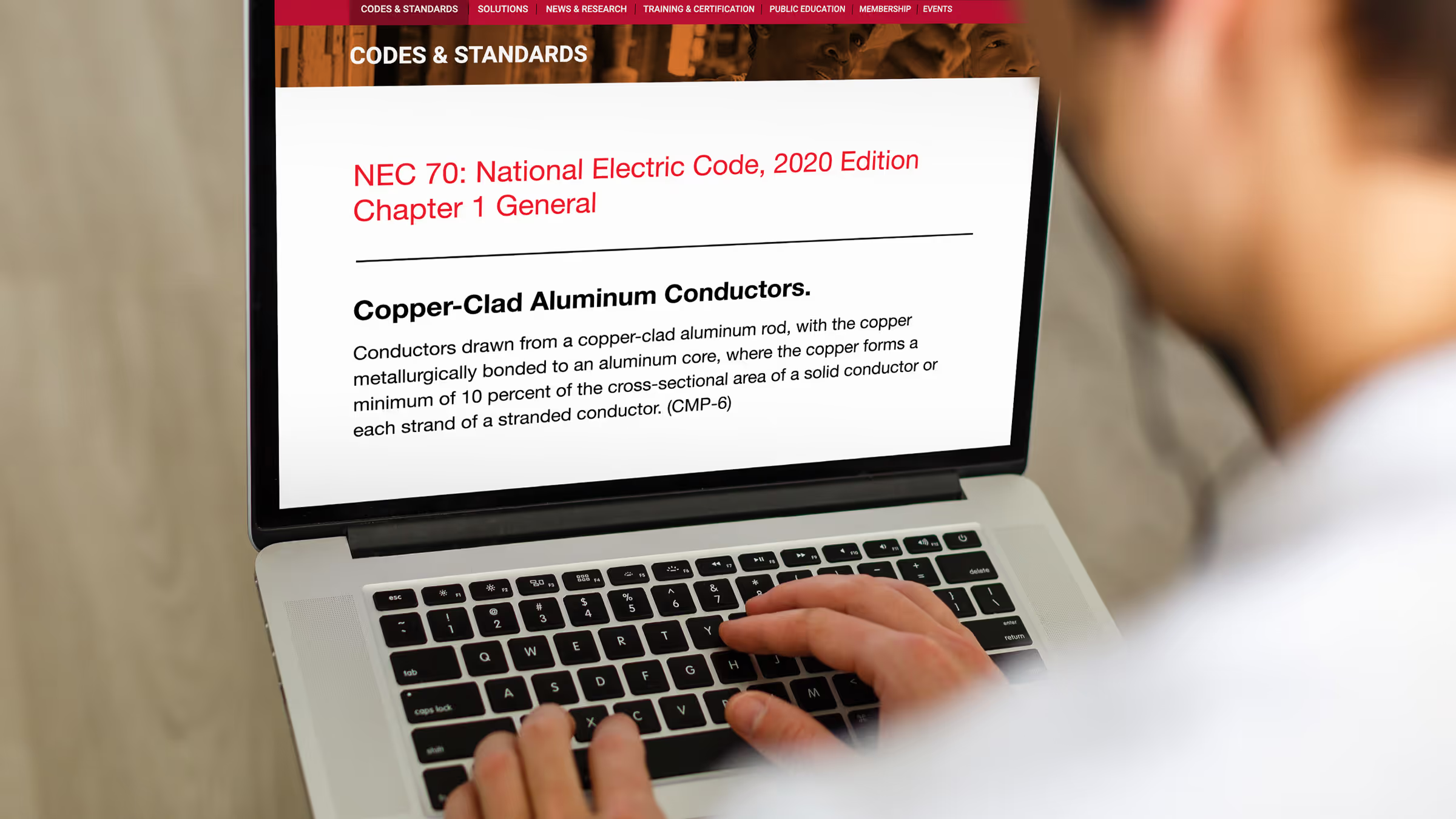

The critical distinction between single-metal aluminum and Copper-Clad Aluminum lies in the metallurgical bonding process. Per ASTM B566-04, CCA conductors must feature a minimum of 10% copper by weight as a metallurgically bonded outer layer. Copperweld CCA conductors exceed this requirement with 27% copper by mass, consisting of oxygen-free copper (OFC) bonded to an 8000 Series aluminum core.
This copper layer eliminates the aluminum-oxide insulating layer that caused termination failures in 1960s-era single-metal aluminum wiring. The copper conducts current at the wire surface where skin effect concentrates AC current flow, while the aluminum core provides structural support and weight reduction.
Understanding the difference between aluminum and Copper-Clad Aluminum (CCA) conductors helps if you know the history. The two conductor materials are considered dissimilar metals in Code. From the very beginning, it's always been that way.
The National Electrical Code recognizes three conductor materials for continuous current: copper, aluminum, and copper-clad aluminum. Per NFPA 70 (NEC) Article 310.106, these are distinct classifications with separate ampacity tables and installation requirements.
CCA conductors are sized using the aluminum column in NEC Table 310.16, but require devices rated CU/AL or CO/ALR for terminations. Single-metal aluminum requires the same device ratings but has different oxidation characteristics that led to its removal from the residential market in the 1970s.
Copperweld CCA conductors meet or exceed all applicable NEC, UL, and ASTM standards for building wire applications. All Copperweld products are manufactured to ASTM B566 specifications with third-party NRTL certification.
No. Copper-clad aluminum (CCA) is a distinct technology that solved the termination problems of 1970s single-metal aluminum wire. CCA features a metallurgically bonded copper layer that eliminates the aluminum-oxide insulation issue. The NEC has classified CCA separately from aluminum since 1971.
Copper-clad aluminum was accepted into the National Electrical Code in the 1971 edition as one of three conductor materials permitted to carry continuous current. Copperweld CCA conductors have been UL-listed since the material's introduction to the market.
Single-metal aluminum wire developed a natural aluminum-oxide layer at termination points that acted as an insulator, causing runaway heating at terminal screws and splices. The thermal instability of utility-grade aluminum used in residential wiring compounded the problem, leading to hundreds of electrical fires between 1966 and 1970.
CCA conductors require devices rated CU/AL or CO/ALR for terminations, as specified in NEC Article 110.14. Standard copper-only (CU) devices are not rated for aluminum or copper-clad aluminum conductors. Always verify device ratings before installation.
Yes. Copperweld conducted nationwide inspections of 1970s-era CCA installations in 2016-2017 to verify long-term safety before re-introducing the product in 2018. Copperweld CCA meets all current NEC requirements and holds UL Listing E492024 for building wire applications.
Author: Peter Graser, Senior Technical Advisor, Copperweld Bimetallics
Last Updated: July 24, 2026
Copperweld Credentials: Copperweld Bimetallics, LLC is the original inventor and leading manufacturer of copper-clad aluminum (CCA) and copper-clad steel (CCS) conductors. Founded in 1915, Copperweld holds UL Listing E492024 and manufactures all products to ASTM B566 specifications with third-party NRTL certification.

Copperweld's friendly sales team is ready to fill your order or help you select products to deliver the performance you need.
Follow us on your favorite social platforms:





Sign up for Copperweld news to learn about the latest industry updates, events, product releases, videos and technical documents.
Lorem ipsum dolor sit amet, consectetur adipiscing elit, sed do eiusmod tempor incididunt ut labore et dolore magna aliqua. Ut enim ad minim veniam, quis nostrud exercitation ullamco laboris nisi ut aliquip ex ea commodo consequat. Duis aute irure dolor in reprehenderit in voluptate velit esse cillum dolore eu fugiat nulla pariatur.
Copperweld's friendly sales team is ready to fill your order or help you select products to deliver the performance you need.
Follow us on your favorite social platforms:
Sign up for Copperweld news to learn about the latest industry updates, events, product releases, videos and technical documents.