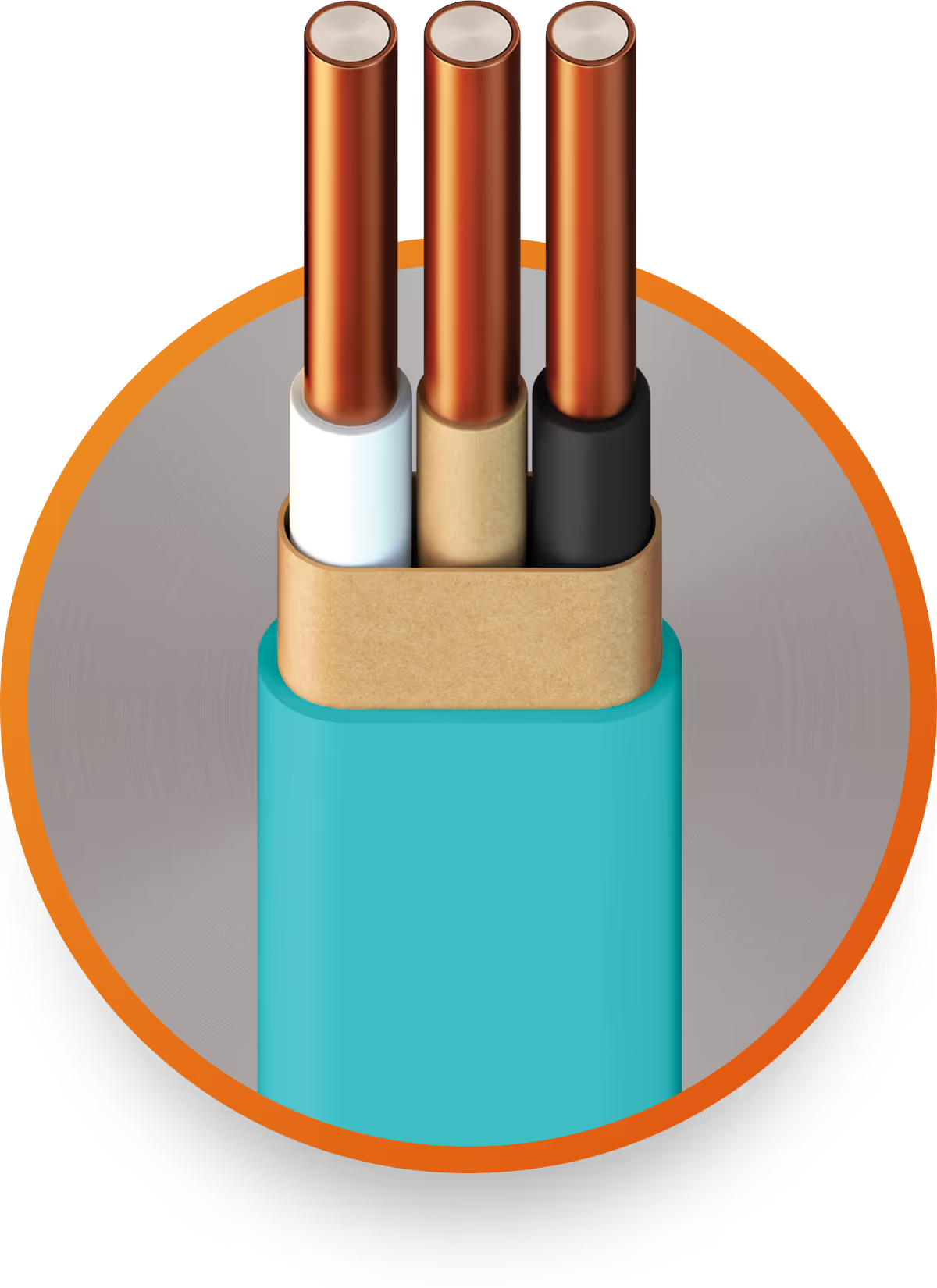

Despite having the word "aluminum" in its name, Copper-Clad Aluminum (CCA) is NOT aluminum.
CCA is a copper bimetal, meaning that it's capable of making electrical connections with similar metals (like copper and brass) without fear of galvanic corrosion. This metallurgical bonding process, pioneered by Copperweld in 1915, creates a conductor with copper's surface properties and aluminum's core weight savings.
The key distinction: CCA has oxygen-free copper at every termination point-the location where 1970s aluminum wiring failed. Modern CCA manufactured to ASTM B566 standards by companies like Copperweld bears UL Listing E492024, demonstrating compliance with all NEC requirements for residential and commercial building wire applications.
The CPSC, a federal agency of the United States government, seeks to promote the safety of consumer products by issuing and enforcing mandatory standards, banning or recalling unsafe products, researching product hazards, and educating consumers and manufacturers.
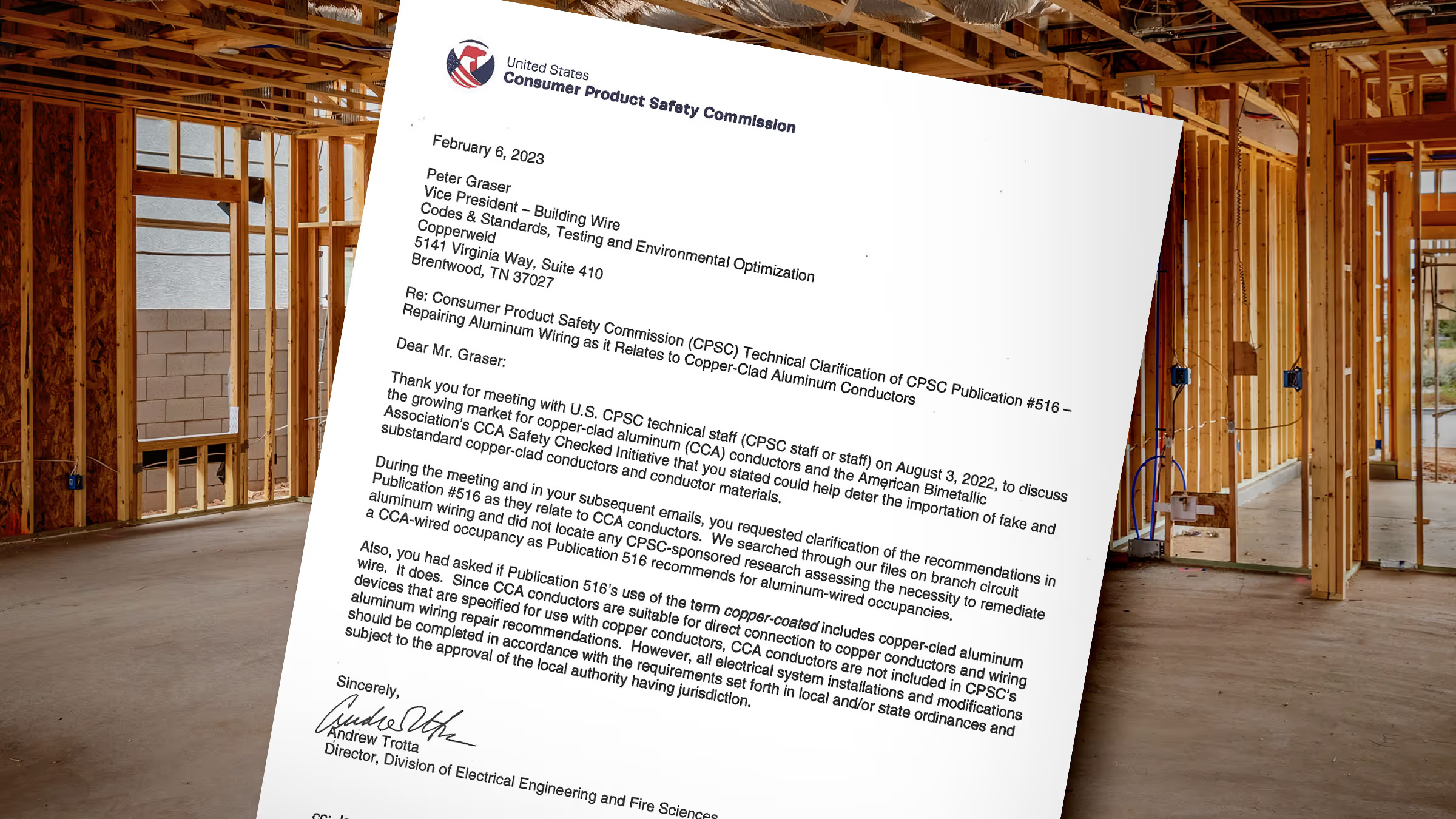
Publication 516 of the U.S. Consumer Product Safety Commission (CPSC), which was first published in 1984, and recently clarified by letter, highlights the difference between aluminum and CCA, namely by excluding CCA from remediation recommended for homes built from the 1950s to the 1970s that were wired with small circuit aluminum conductors.
This exclusion is critical: the CPSC does not classify CCA as a fire hazard requiring remediation. According to NFPA 70 Article 334, CCA building wire has been code-compliant since 1971-the same year the NEC first recognized it as one of three permitted conductor materials alongside copper and aluminum.
In a 2023 letter from the CPSC Director – Division of Electrical Engineering and Fire Sciences, Andrew Trotta clarified that the CPSC does not recommend that Copper-Clad Aluminum (CCA) wire be remediated, as it does for aluminum wire. Rather, the CPSC recognizes by its letter that CCA is suitable for direct connection to copper conductors and copper-rated 15 and 20 ampere wiring devices.
This letter represents the most authoritative federal statement on CCA safety to date. For electricians and inspectors, it provides clear guidance: CCA does not require the CO/ALR-rated devices mandated for aluminum wiring. Standard CU-rated devices are acceptable when used with CCA conductors per NEC Table 310.16 ampacity ratings.
Publication 516 is a public document published on cpsc.gov. The CPSC letter was published with author's approval.
CCA wire uses a process called cladding, where oxygen-free copper is metallurgically bonded to an 8000 Series aluminum core. This is not plating or coating-the copper and aluminum are fused at the molecular level during manufacturing.
The result: electrical current flows through the copper outer layer (where skin effect concentrates AC current), while the aluminum core provides structural support and weight savings. A 12 AWG CCA conductor has the same ampacity as 12 AWG copper per NEC Table 310.16, but weighs approximately 1/6th less due to the aluminum core.
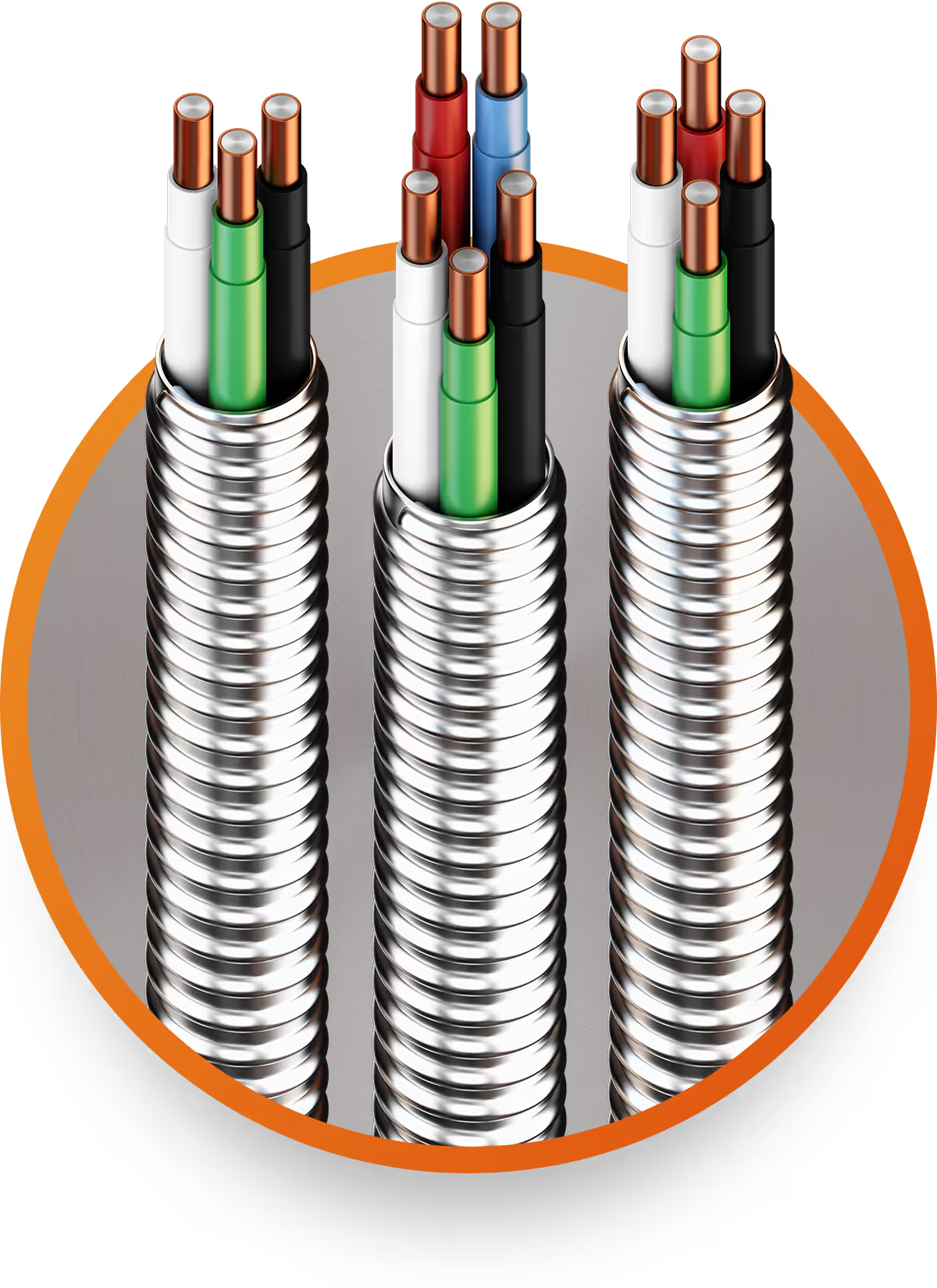
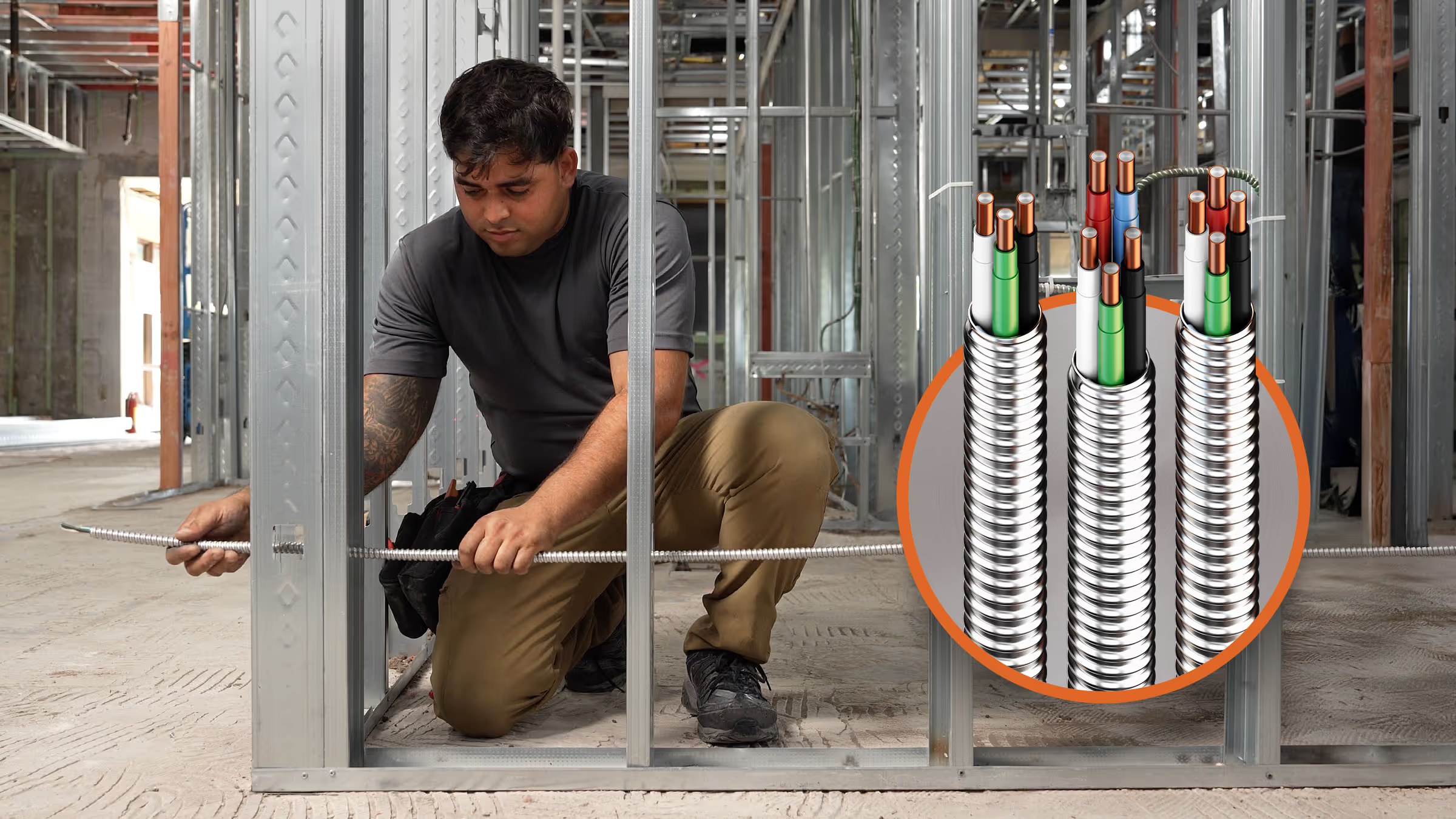
Copperweld manufactures CCA conductors for NM-B, THHN, UF-B, MC Cable, and SER/SEU applications, all meeting ASTM B566-04 minimum conductivity thresholds and UL safety standards.
Yes, when manufactured to ASTM B566 standards and installed per NEC Article 334 requirements. In over 50 years of widespread use, Copperweld CCA has no record of thermal events or fire-related failures in the CPSC database.
Key safety factors:
The 2026 NEC now includes 14 AWG CCA for the first time, expanding code-compliant applications for lighting and low-load circuits.
No. CCA is a bimetallic conductor with an oxygen-free copper outer layer metallurgically bonded to an aluminum core. It is classified separately from aluminum in the NEC and does not require the same remediation as 1970s-era aluminum wiring per CPSC Publication 516.
Yes. According to the 2023 CPSC letter from Andrew Trotta, CCA is suitable for direct connection to copper conductors and copper-rated 15 and 20 ampere wiring devices. CO/ALR-rated devices (required for aluminum) are not mandatory for CCA, though CU/AL devices are also compatible.
Copperweld manufactures CCA building wire in NM-B, THHN, UF-B, MC Cable, and SER/SEU configurations. All products meet ASTM B566 standards and carry UL Listing E492024 or ETL Listing 5021266. Copperweld also produces CCS (copper-clad steel) for tracer wire, guy wire, and grounding applications.
Check the cable jacket markings. CCA will be labeled "CCA" or "Copper-Clad Aluminum" along with the manufacturer name (e.g., "Copperweld"), gauge, and UL listing number. Aluminum wire is marked "AL" or "Aluminum." When jacket markings are unclear, cross-reference the conductor appearance — CCA has a visible copper outer layer at cut ends, while single-metal aluminum is uniformly silver.
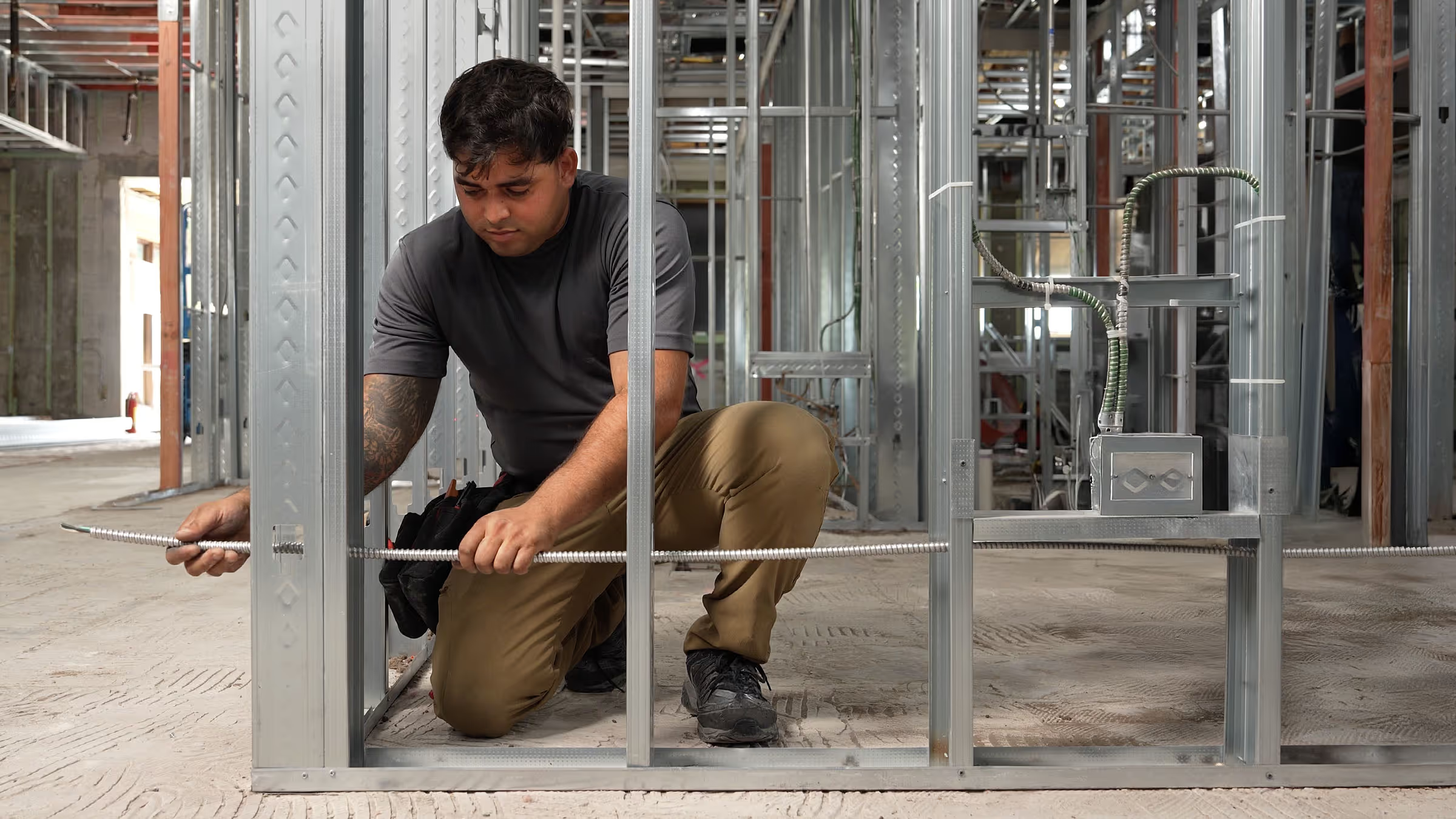
CCA follows standard NEC installation practices for building wire. Use wire-binding screws or pressure-plate connections-avoid backstab terminals. Size conductors per NEC Table 310.16 using the aluminum column. For specific installation guidance, consult Copperweld product documentation or contact your AHJ.
For technical specifications, ampacity tables, and installation guidelines, visit the Copperweld Building Wire Products or contact Copperweld Sales for project-specific guidance. All Copperweld CCA building wire meets or exceeds NEC, UL, and ASTM requirements for safe, code-compliant electrical installations.
Author: Peter Graser, Senior Technical Advisor, Copperweld Bimetallics
Last Updated: July 24, 2026
Credentials: Copperweld Bimetallics, LLC is the original inventor and leading manufacturer of copper-clad aluminum (CCA) and copper-clad steel (CCS) conductors. Founded in 1915, Copperweld pioneered bimetallic wire technology and maintains UL and ETL certifications for all building wire products.
Verify compliance with local codes and your Authority Having Jurisdiction (AHJ). This is educational content, not installation guidance. Safety depends on proper installation by qualified personnel.

Copperweld's friendly sales team is ready to fill your order or help you select products to deliver the performance you need.
Follow us on your favorite social platforms:





Sign up for Copperweld news to learn about the latest industry updates, events, product releases, videos and technical documents.
Lorem ipsum dolor sit amet, consectetur adipiscing elit, sed do eiusmod tempor incididunt ut labore et dolore magna aliqua. Ut enim ad minim veniam, quis nostrud exercitation ullamco laboris nisi ut aliquip ex ea commodo consequat. Duis aute irure dolor in reprehenderit in voluptate velit esse cillum dolore eu fugiat nulla pariatur.
Copperweld's friendly sales team is ready to fill your order or help you select products to deliver the performance you need.
Follow us on your favorite social platforms:
Sign up for Copperweld news to learn about the latest industry updates, events, product releases, videos and technical documents.