
Not long ago, copper crossing $5 per pound felt unprecedented — a psychological and financial milestone that dominated budgetary conversations in meeting rooms and jobsite trailers across the map. Remarkably, that event occurred only months before copper surged above $6 per pound, redefining market expectations and signaling more than a momentary price swing. Since then, continued price swings at historically elevated levels have reinforced that this is not simply another commodity cycle, but a fundamentally different planning environment for the construction industry.
For construction professionals, the real issue isn’t whether copper stabilizes at $5.80 or $6.10 in a given quarter. It’s what sustained volatility above prior benchmarks does to planning, pricing, and profitability — especially for commercial projects that unfold over long timelines.
Residential builders feel the impact of copper swings quickly and visibly. Commercial projects feel that volatility even more, because pricing decisions are often made months — or years — before material is purchased and installed. At this time scale, copper doesn’t just influence material cost. It reshapes risk.
Commercial construction operates on a different clock.
Design development, permitting, bidding, awarding, and mobilization can stretch well beyond a year. During that time, copper prices can move dramatically — sometimes multiple times — before the first coil of wire ever reaches the jobsite.
While electrical scope may represent a smaller percentage of total commercial project cost compared to residential, it carries an outsized share of commodity volatility. Once estimates are built and contracts are awarded, that volatility becomes very difficult to absorb.
In residential construction, material pricing often adjusts closer to installation. In commercial construction, pricing assumptions are typically locked early — and then tested later.
Commercial construction operates with tight margins. General contractors and project owners function in an environment where even modest cost deviations can erase profitability.
Copper prices breaking above $6 per pound intensify that pressure. Estimators and finance teams are forced into uncomfortable tradeoffs:
Neither option addresses the root issue — exposure to a volatile commodity embedded within the electrical scope. At today’s copper levels, wire selection is no longer just a procurement decision. It is a financial decision that directly affects whether project margins hold or erode.
Rising electrical material costs rarely remain isolated.
In commercial projects, unexpected increases in electrical materials often trigger a cascade of downstream consequences:
These secondary effects frequently cost more — in time, coordination, and opportunity — than the original material increase itself. The longer volatility goes unaddressed, the harder it becomes to contain.
Most commercial bids assume a limited window of price stability — often 60 to 90 days. In a copper market that has already demonstrated the ability to move past $6 per pound, that assumption is increasingly fragile.
Delays between bid submission, contract award, and material procurement quietly amplify exposure. By the time wire is purchased, the copper pricing environment that shaped the original estimate may no longer exist.
In those moments, teams often realize that decisions they hoped were behind them are suddenly back on the table — not because the scope changed, but because the market did.
This timing mismatch puts pressure on every stakeholder:
Copper doesn’t need to spike dramatically to cause disruption. It only needs to move at the wrong time.
As copper volatility reshapes bid assumptions, some commercial builders and contractors have already begun reducing their exposure by rethinking wire selection, including Copper-Clad Aluminum. That shift matters.
When bids are built on different assumptions about copper risk, the gap between them isn’t just price — it’s confidence. Bids anchored to more stable material inputs allow teams to price work with greater conviction, while bids that remain fully tied to copper volatility carry more uncertainty into both the number and the strategy behind it.
In a market defined by volatility, that difference can influence not only competitiveness at bid time, but resilience once construction begins.
Addressing copper volatility isn’t about chasing the lowest upfront material cost. It’s about reducing reliance on a cost input that has proven structurally unstable — without introducing new uncertainty elsewhere.
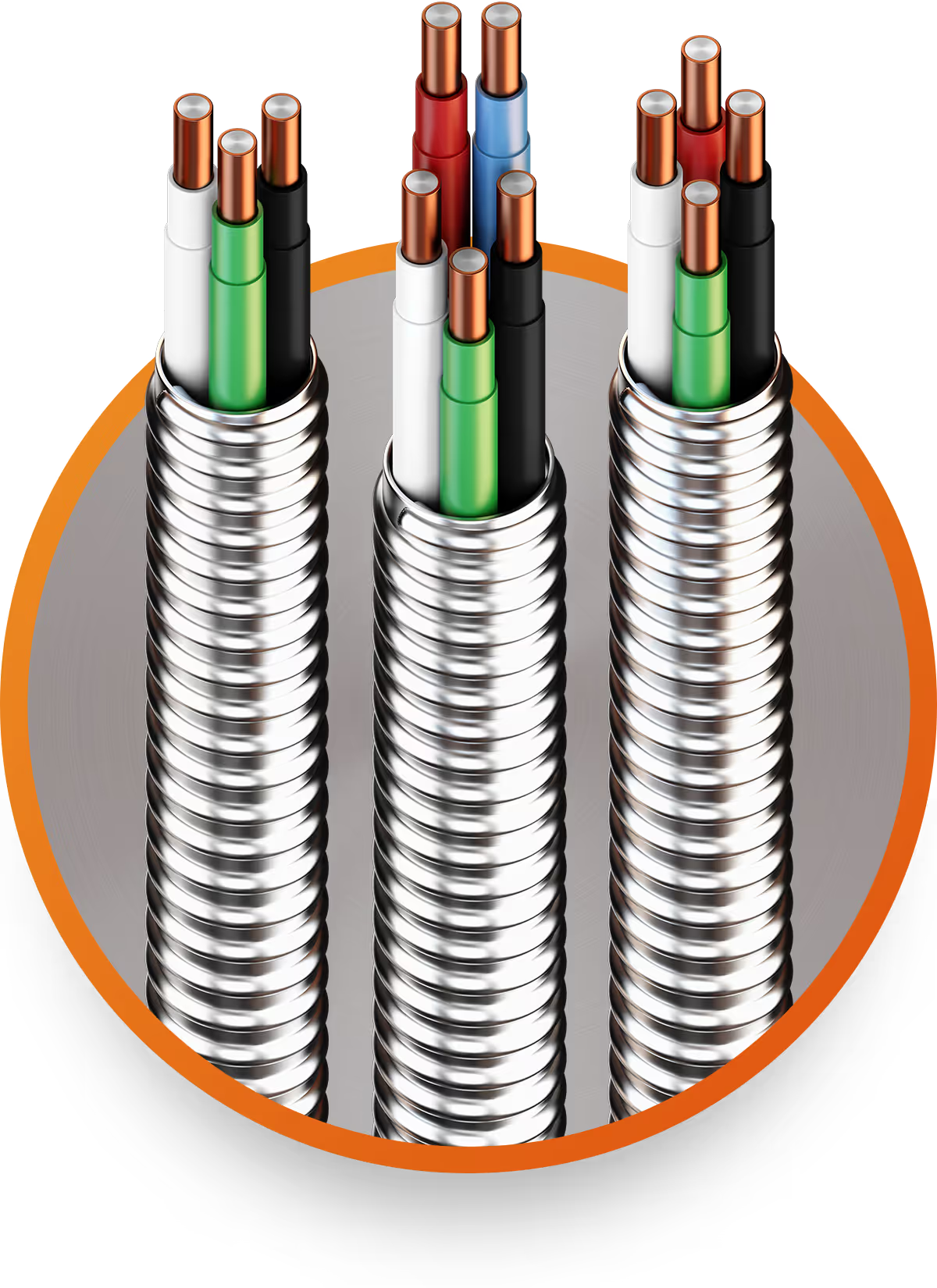
Copperweld® Copper-Clad Aluminum (CCA) Building Wire draws on more than a century of bimetallic conductor expertise. That experience shapes how Copperweld engineers its industry-leading bimetallic products for real-world electrical applications — balancing electrical performance, mechanical reliability, and long-term manufacturing consistency.
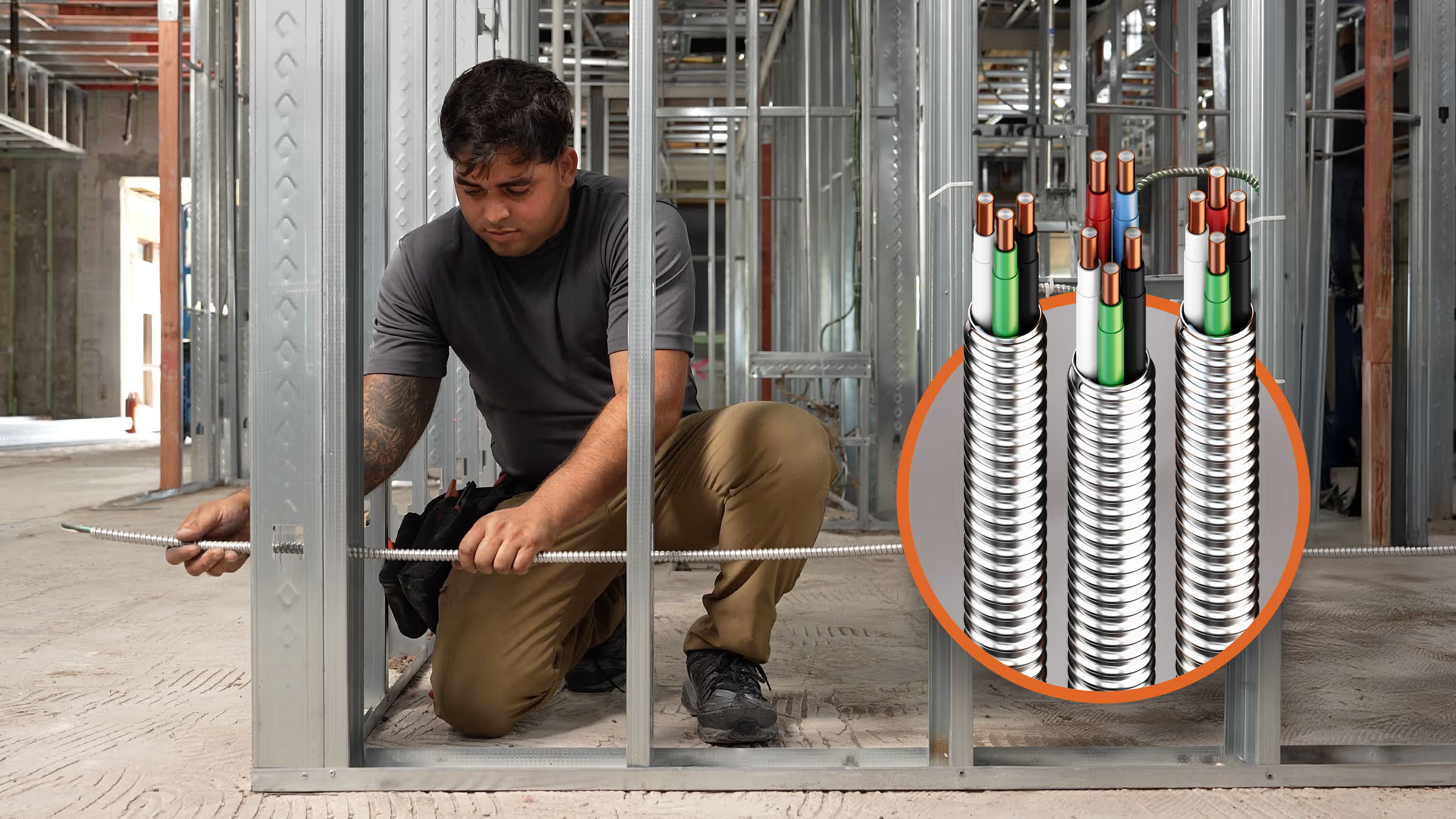
As a result, Copperweld CCA uses a fraction of the copper content of traditional solid copper conductors. Recognized under the NEC, Copper-Clad Aluminum delivers comparable performance when properly sized, making it a code-compliant substitute that lowers copper exposure without sacrificing performance. Its metallurgically bonded construction reflects the same engineering discipline that pioneered bimetallic conductor technology, ensuring bond integrity that supports reliable performance over the life of the installation.
As copper prices fluctuate around record levels, stability becomes a differentiator.
Predictable material costs allow estimators to bid with greater confidence, contractors to reduce contingency padding, and project managers to avoid reactive decision-making later in the build. Lower exposure also reduces the need to warehouse material early, freeing capital and simplifying logistics.
In this environment, wire choice influences more than the electrical scope. It shapes how risk is distributed across the entire project.
Copper volatility is no longer an occasional disruption — it has become part of the baseline. Commercial projects that recognize this early are better positioned to protect schedules, budgets, and margins.
The question facing owners, contractors, and designers isn’t whether copper prices will move again. It’s whether projects are structured to absorb that movement without unraveling downstream decisions.
As copper continues to test — and periodically exceed — the $6-per-pound threshold, predictability has become a defining feature of resilient commercial projects. That’s why more commercial teams are turning to Copperweld® CCA Metal-Clad Cable to improve material cost stability and bring greater predictability to commercial project economics.


Copperweld's friendly sales team is ready to fill your order or help you select products to deliver the performance you need.
Follow us on your favorite social platforms:





Sign up for Copperweld news to learn about the latest industry updates, events, product releases, videos and technical documents.
Lorem ipsum dolor sit amet, consectetur adipiscing elit, sed do eiusmod tempor incididunt ut labore et dolore magna aliqua. Ut enim ad minim veniam, quis nostrud exercitation ullamco laboris nisi ut aliquip ex ea commodo consequat. Duis aute irure dolor in reprehenderit in voluptate velit esse cillum dolore eu fugiat nulla pariatur.
Copperweld's friendly sales team is ready to fill your order or help you select products to deliver the performance you need.
Follow us on your favorite social platforms:
Sign up for Copperweld news to learn about the latest industry updates, events, product releases, videos and technical documents.