
This may sound like a simple software update, but it represents a meaningful shift that removes a long-standing gap between specifying Copper-Clad Steel and actually designing with it inside the tools engineers rely on every day.
Substation grounding design depends on simulation. Tools like CDEGS and WinIGS are where layouts are tested, performance is evaluated, and decisions are finalized.
These platforms are used as part of the design process, helping engineers assess how current flows through a substation, how the grid performs under fault conditions, and how step-and-touch criteria are addressed within the layout.
When a material isn’t available in those tools, it often isn’t part of that evaluation at all.
In the past, engineers who wanted to explore Copper-Clad Steel had to work around that limitation, substituting other materials or stepping outside the software to account for differences. That extra friction made it less likely to be considered, even in applications where it may have been a strong or better fit.
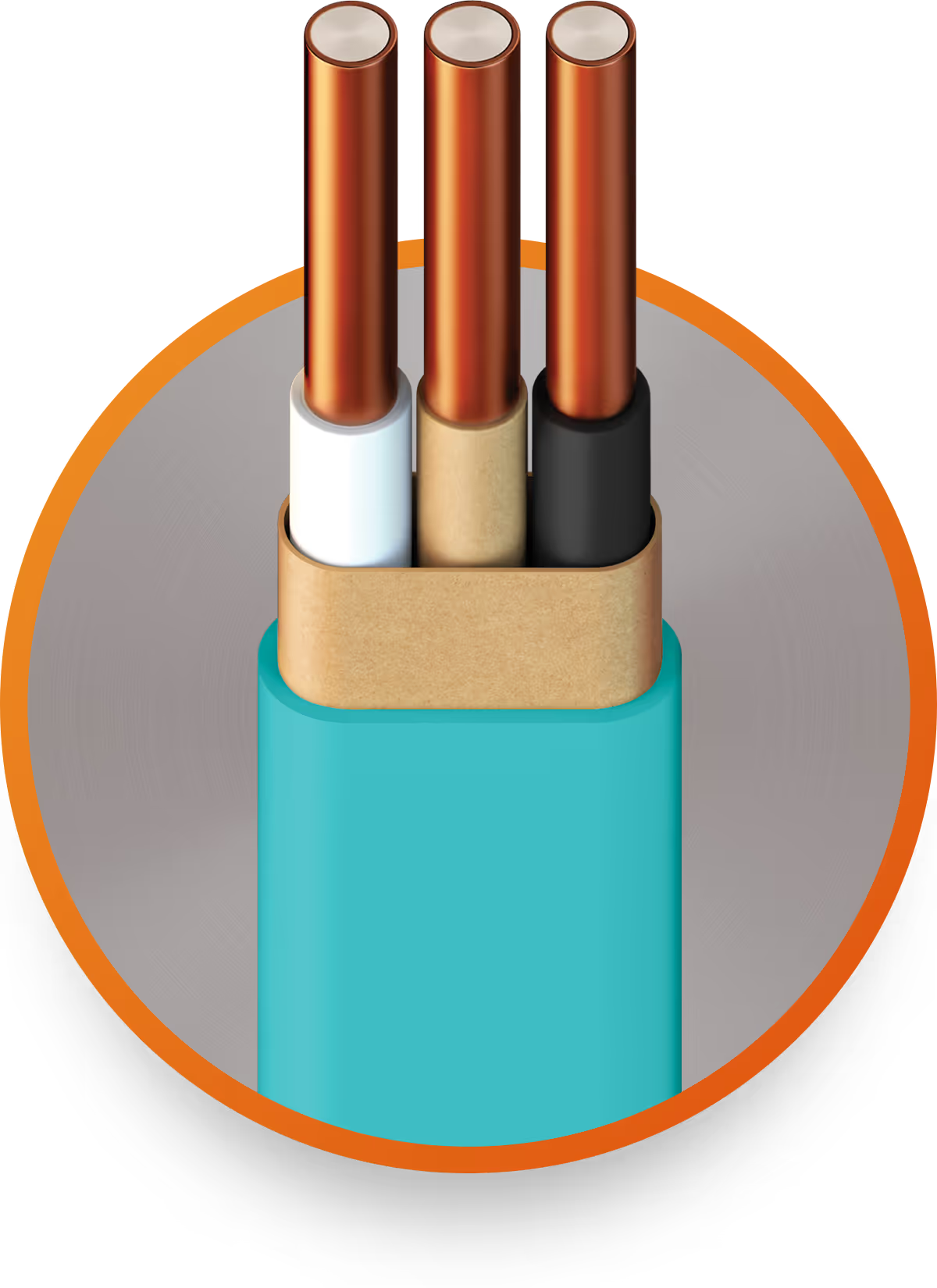
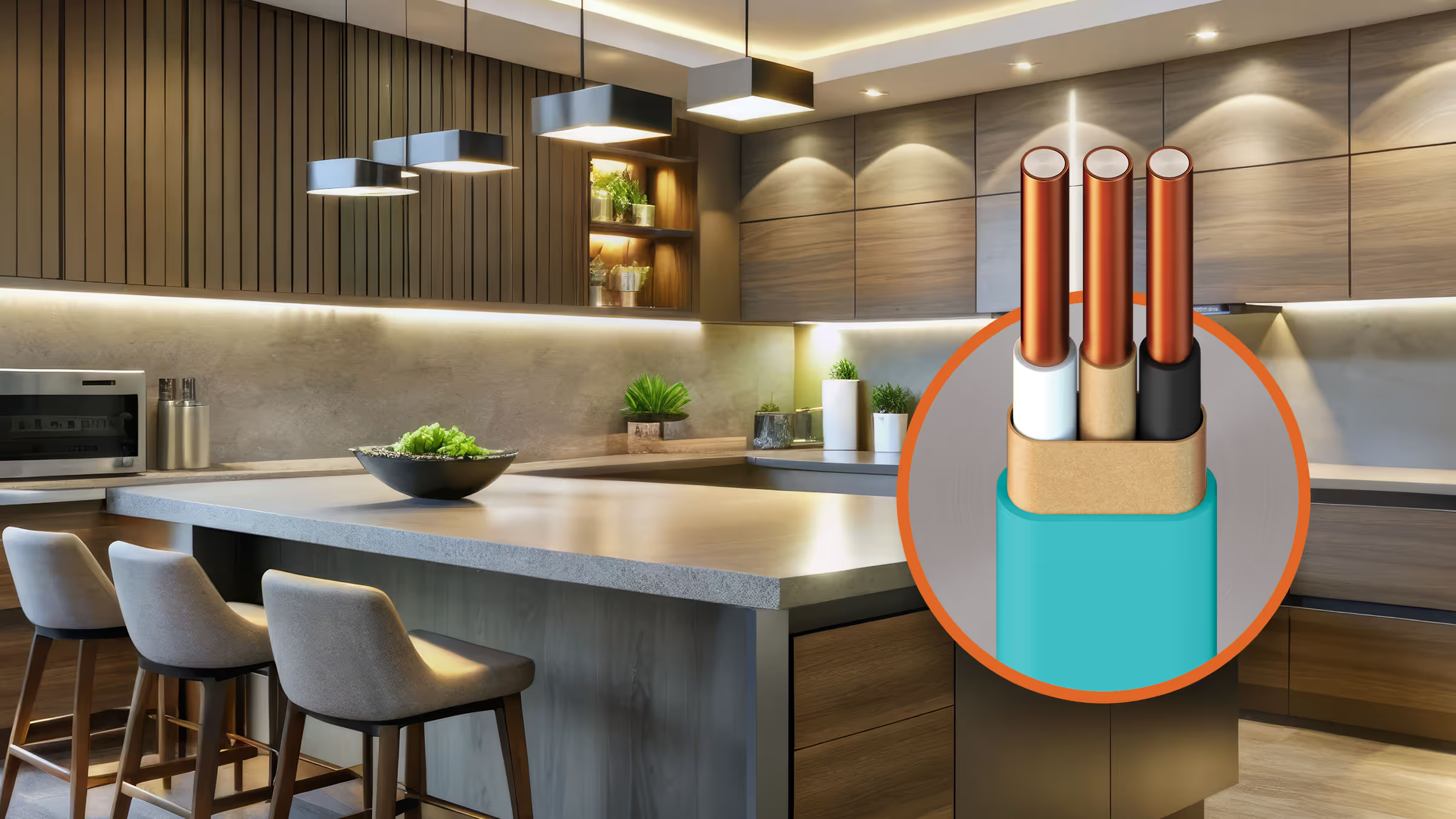
With Century and ArcAngel now built into the design libraries for these platforms — marking the first time Copper-Clad Steel has been directly available for modeling in these tools — that barrier is gone.
The immediate benefit is convenience. Copper-Clad Steel is now part of the same workflow as other grounding materials.
But the bigger impact is that it brings Copper-Clad Steel into the design process earlier — when layout decisions are being made and material choices are evaluated side by side.
Engineers can now evaluate CCS during layout and optimization, rather than something considered after the fact. That includes comparing material choices within the same study and seeing how those decisions influence the overall design.
Just as importantly, it allows engineers to explore how conductor selection affects both electrical performance and physical design constraints. For example, in a substation design where conductor sizing is influenced by both fault current requirements and mechanical criteria, engineers can now evaluate how Copper-Clad Steel performs within the same model as copper — seeing how material choice affects grid layout, conductor sizing, and overall design approach.
In many grounding applications, conductors are sized not only for fault current performance, but also to meet mechanical strength requirements under applicable standards.
With solid copper, tensile strength often drives that size increase.
Copper-Clad Steel introduces a different set of tradeoffs. By combining mechanical strength with electrical conductivity, it allows engineers to evaluate conductor sizing in a way that can more closely align with electrical requirements — without the same degree of upsizing driven purely by strength.
With Copperweld Century and ArcAngel now included in CDEGS and WinIGS, those tradeoffs can now be examined within the same design environment used to evaluate the rest of the grounding system.
That difference gives engineers another way to approach conductor sizing, especially in designs where both electrical performance and mechanical requirements influence the outcome.
The impact extends beyond substation grids.
In transmission applications, grounding conductors are often installed in remote locations where long runs of copper can be exposed and unmonitored. Those conditions can make traditional materials more vulnerable to theft, creating risks for downstream equipment and system performance.
Copper-Clad Steel introduces an alternative that can be evaluated in those same design scenarios — particularly in applications where installation conditions and long-term system considerations both play a role.
That makes material selection part of the overall design strategy in environments where long-term performance and installation conditions both influence the outcome.
With Copperweld Century and ArcAngel now part of CDEGS and WinIGS, Copper-Clad Steel grounding conductors become a more accessible option — one that can be explored alongside traditional materials without added steps or assumptions.
For engineers, that means more flexibility in how grounding systems are designed, and a clearer path to evaluating solutions that align with both electrical and mechanical requirements.


Copperweld's friendly sales team is ready to fill your order or help you select products to deliver the performance you need.
Follow us on your favorite social platforms:





Sign up for Copperweld news to learn about the latest industry updates, events, product releases, videos and technical documents.
Lorem ipsum dolor sit amet, consectetur adipiscing elit, sed do eiusmod tempor incididunt ut labore et dolore magna aliqua. Ut enim ad minim veniam, quis nostrud exercitation ullamco laboris nisi ut aliquip ex ea commodo consequat. Duis aute irure dolor in reprehenderit in voluptate velit esse cillum dolore eu fugiat nulla pariatur.
Copperweld's friendly sales team is ready to fill your order or help you select products to deliver the performance you need.
Follow us on your favorite social platforms:
Sign up for Copperweld news to learn about the latest industry updates, events, product releases, videos and technical documents.