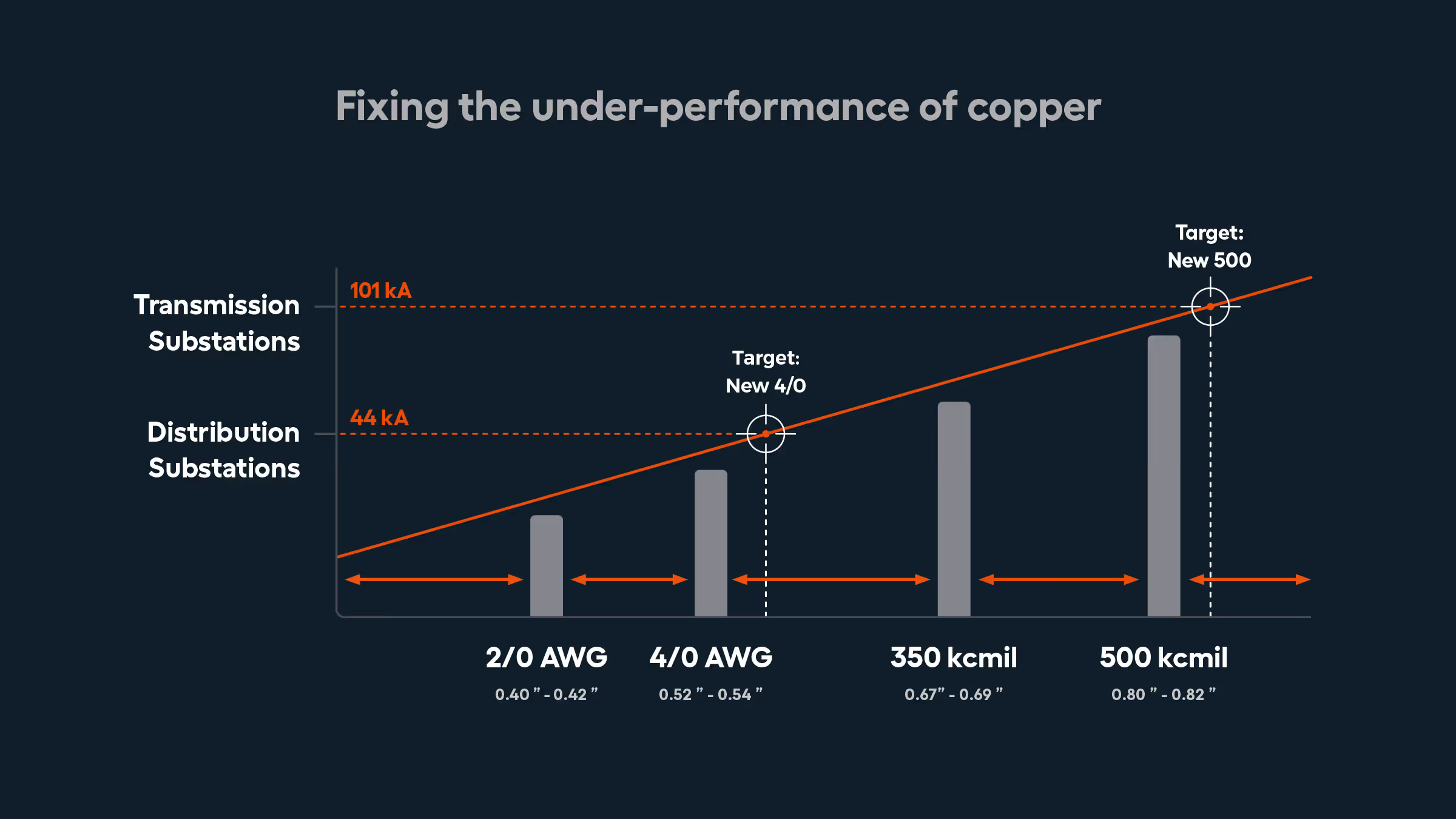

With a repeatable testing methodology established and promising conductor concepts taking shape, Copperweld engineers shifted their attention toward defining the specific performance objectives that would shape the next generation of grounding conductors.
Rather than allowing traditional conductor sizes or existing manufacturing practices to dictate the design, the team established engineering targets based on real-world application requirements. Electrical fault current capacity, flexibility, mechanical strength, corrosion resistance, long-term reliability, and installation efficiency all became measurable objectives. Every design decision was evaluated against those requirements rather than simply improving a single specification.
This engineering-first approach allowed the research to guide product development instead of forcing new ideas into conventional limitations. The result was a conductor engineered around the needs of modern substations rather than the constraints of historical designs.
With engineering targets clearly established, the next step was to build prototypes, test them under real fault conditions, and let the laboratory determine what came next.

Copperweld's friendly sales team is ready to fill your order or help you select products to deliver the performance you need.
Follow us on your favorite social platforms:





Sign up for Copperweld news to learn about the latest industry updates, events, product releases, videos and technical documents.
Lorem ipsum dolor sit amet, consectetur adipiscing elit, sed do eiusmod tempor incididunt ut labore et dolore magna aliqua. Ut enim ad minim veniam, quis nostrud exercitation ullamco laboris nisi ut aliquip ex ea commodo consequat. Duis aute irure dolor in reprehenderit in voluptate velit esse cillum dolore eu fugiat nulla pariatur.
Copperweld's friendly sales team is ready to fill your order or help you select products to deliver the performance you need.
Follow us on your favorite social platforms:
Sign up for Copperweld news to learn about the latest industry updates, events, product releases, videos and technical documents.