A closer look at Copperweld® CCA Building Wire for

AHJs & Inspectors

Safety is our standard

As codes evolve and Copper-Clad Aluminum (CCA) adoption continues, AHJs and inspectors are seeking clear, science-based guidance to evaluate CCA consistently and confidently.

Copperweld Copper-Clad Aluminum (CCA) Building Wire is built on a long-standing foundation of safety, innovation, and code compliance, ensuring quality and reliability through state-of-the-art manufacturing, continuous research, and extensive third-party testing.

As the global leader in bimetallic conductor technology, Copperweld brings more than a century of metallurgical expertise — delivering building wire solutions designed for consistency, reliability, and confidence in inspection.

Strengthen Your CCA Expertise

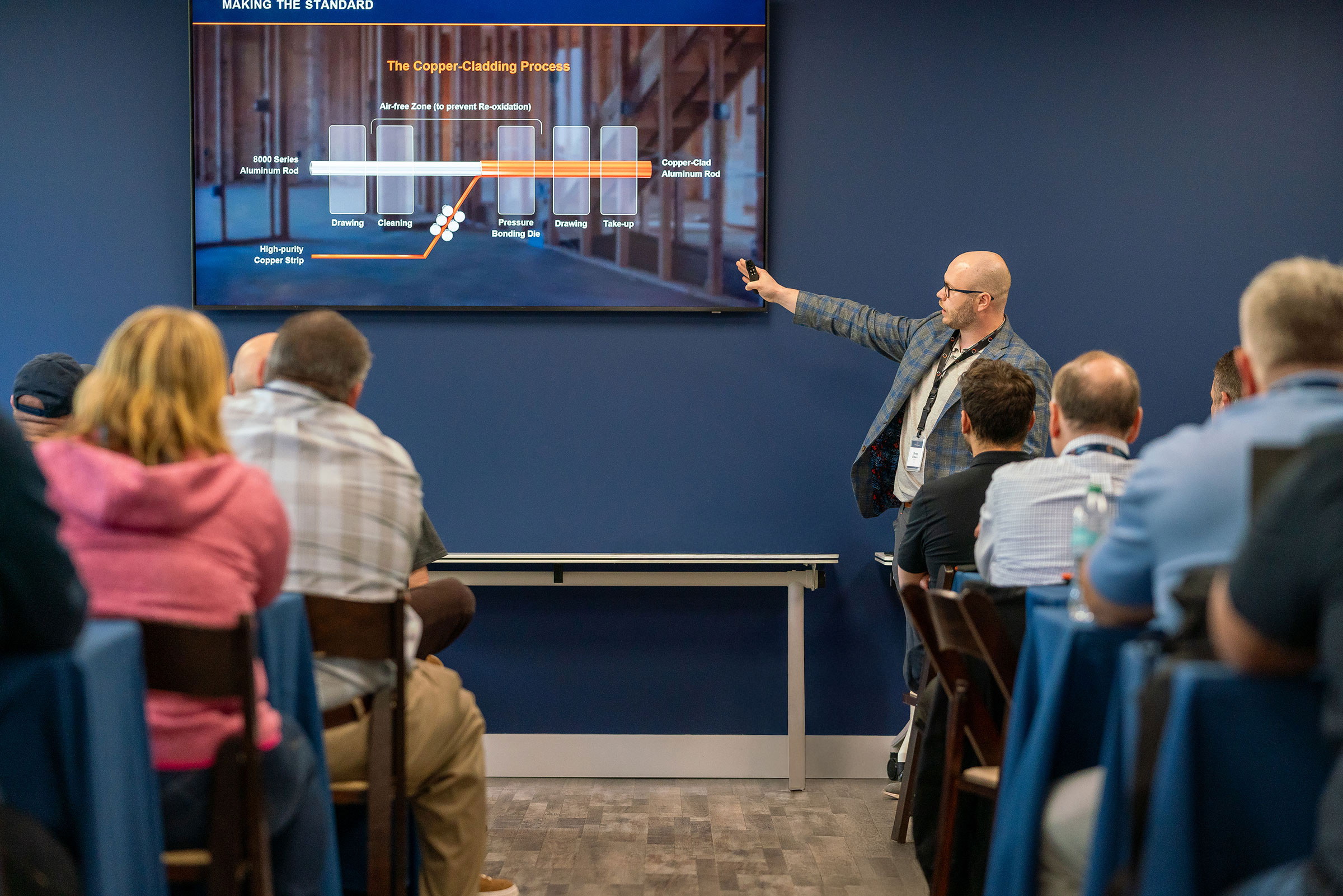
Copperweld offers a CCA-focused Continuing Education (CE) training program that equips teams for confident inspections in the field.

Earn ICC CEUs with Copperweld’s CCA training course:

NEC requirements, history, and code recognition

Knowledge that brings installation and inspection clarity

Performance and safety testing across conductor types

The science behind CCA and its metallurgical bond

A Legacy of Safe, Code-compliant Performance

Code Compliant
CCA was first referenced by the NEC in 1971 following UL fact-finding studies.
NRTL Listed
Listed by Underwriter's Laboratories and Intertek
History of Performance
CCA has more than half a century of proven performance with standard circuit components

CCA Building Wire Quick Facts

  1. Copper-Clad Aluminum (CCA) conductors and cables have been referenced by the NEC since the 1971 edition.
  2. CCA was invented in response to a U.S. copper shortage during the Korean and Vietnam wars, as copper is the primary alloying metal used to make brass for munitions.
  3. Many in the industry recognize CCA as a solution to the aluminum building wire connection issues that emerged in the 1960s.
  4. By 1979, the copper shortage had eased after the Vietnam War. However, CCA became less competitive due to the falling price of copper.
  5. Still, CCA found success as a data conductor, where upsizing isn’t needed. At high frequencies, current travels at the periphery and surface of a conductor (skin effect), where CCA maintains 100% of its copper.
  6. CCA is a bimetallic conductor made by metallurgically bonding two metals through a mechanical process. The core is a grade 8000-series aluminum alloy, and the cladding is high-conductivity, oxygen-free copper.
  7. Because CCA is a manufactured material, both the NEC and UL standards regulate its specification, performance, and installation.
  8. During the cladding process, the aluminum oxide layer on the core is completely removed and replaced with copper, improving the contact resistance profile ‘of the conductor’ for better ‘electrical’ connection performance.
  9. By mass (weight), CCA is 27% copper and 73% aluminum. By cross-sectional area, it is 10% copper and 90% aluminum.
  10. The NEC requires CCA conductors used in building wire applications to be listed and to meet the UL 1581 product safety standard.
  11. Copperweld is the only manufacturer in the world with a UL listing for CCA building wire material.
  12. The NEC defines CCA in Chapter 1 as: “Conductors drawn from a copper-clad aluminum rod, with the copper metallurgically bonded to an aluminum core.”
  13. Additional requirements for CCA wire and cable appear in NEC Article 310 and the relevant wiring methods.
  14. Since the 2020 edition of the NEC, CCA and copper are not considered dissimilar metals for purposes of electrical connections.
  15. When compared to an ampacity-equivalent copper conductor and properly spliced or terminated, CCA and copper conductors exhibit nearly identical contact resistance.
  16. Due to aluminum’s surface oxide layer, studies have shown that aluminum conductors have, on average, twice the contact resistance of similarly rated copper and CCA conductors when used in typical Cu-rated splices and terminations.
  17. Of the three NEC-permitted branch circuit conductor materials, CCA has the lowest AC impedance when installed per NEC Table 310.16 (upsized like aluminum relative to copper).
  18. Because of its lower resistance, CCA circuits result in the lowest voltage drop compared to circuits wired with copper or aluminum conductors.
  19. When compared to an ampacity-equivalent copper conductor, CCA uses only one-sixth the amount of copper to complete the same circuit.
  20. Per the NEC, CCA is permitted in the following applications: NM cables, MC cables, tray cables, PV cables, limited power cables, conduit wiring methods, UF cables, flat cables, and control and signal conductors.
  21. 10-ampere circuits have a narrow scope and are limited to three applications: lighting circuits, bathroom and laundry fans connected to lighting circuits, and electronic controls for gas fireplaces.
  22. 10-ampere circuits must be dedicated circuits and cannot power general-use receptacles.
  23. 14 AWG CCA cannot be backstabbed into snap switches.
  24. After the Second Revision stage of the code setting process, it appears that the 2026 NEC edition will permit 14 AWG CCA as a 10-ampere circuit conductor, and 16 AWG CCA for use as a power-control-signal (PCS) conductor within the following three wiring methods: MC cable, NM cable and Tray cable (TC).
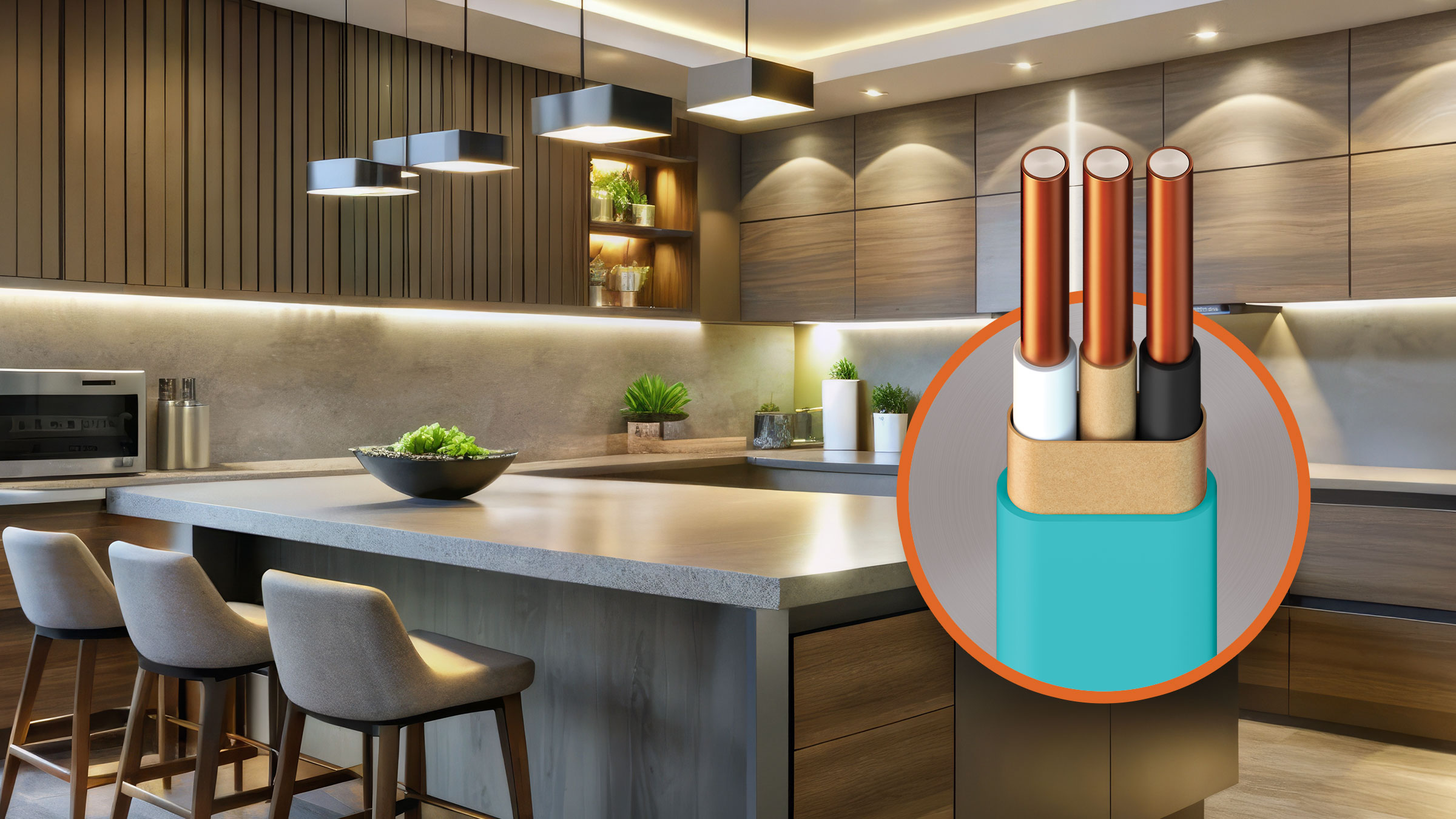
  25. The Copperweld 14 AWG NM-B cable features a blue-teal jacket color.

Copperweld Building Wire Products

Standards, Listing and Compliance

NM-B Cable

600V | Premium Copper-Clad Aluminum (CCA) Building Wire

Standards:

UL 83, UL 719, UL 1581, UL 2556; ASTM-B-566

Listing:

UL: E538020, E510284, E492024; ETL: 5021266; RoHS Compliant, REACH Compliant

Applications:

Refer to Article 334 of the NEC

Metal-Clad Cable

600V | Copperweld Copper-Clad Aluminum (CCA) Building Wire

Standards:

UL 83, UL 1569, UL 1581, UL 2556, NFPA 70 (NEC®), ASTM B566

Listing:

UL: E510284, E523379, E538020; ETL: 5021266; RoHS Compliant; REACH Compliant

Applications:

Refer to Article 330 of the NEC
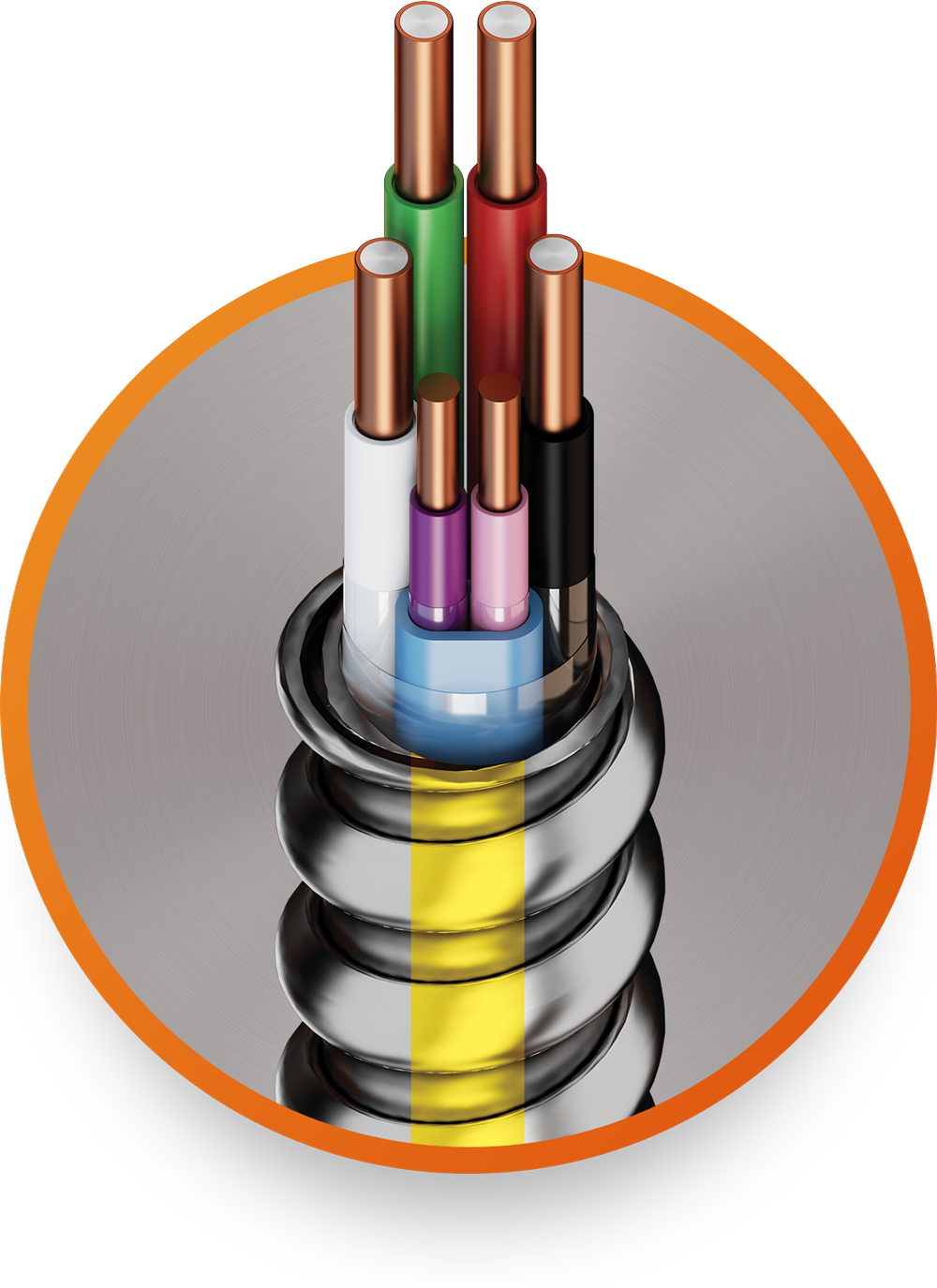
Metal-Clad PCS Cable

600V | Metal-Clad Cable with Power and Control/Signal Element

Standards:

UL 66, UL 83, UL 1569, UL 1581, UL 2556, ASTM B566

Listing:

UL: E523379, E510284 and E538020; RoHS Compliant; REACH Compliant

Applications:

Refer to Article 330 and 725 of the NEC. For applications suited for cables with LV power with control/signal/lighting conductors. Power and/or lighting circuits, as well as signal and/or control circuits, meet the requirementsof NEC Section 725.

Metal-Clad HCF Cable

600V | Metal-Clad Cable for Healthcare Facilities

Standards:

UL 83, UL 1569, UL 1581, UL 2556, ASTM B566, ASTM B800

Listing:

UL: E510284, E523379, E538020; RoHS Compliant; REACH Compliant

Applications:

Refer to Article 330 and 517 of the NEC. Suitable for use in “Patient Care” areas of hospitals and health care facilities.

Metal-Clad HCPCS Cable

600V | Metal-Clad Cable for Healthcare Facilities with Power and Control/Signal Element

Standards:

UL 66, UL 83, UL 1569, UL 1581, UL 2556, ASTM B566, ASTM B800

Listing:

UL: E510284, E523379, and E538020; RoHS Compliant; REACH Compliant

Applications:

Refer to Article 330 and 517 of the NEC. Suitable for use in “Patient Care” areas of hospitals and health care facilities. Power and/or lighting circuits, as well as signal and/or control circuits, meet the requirements of NEC Section 725.136.

Metal-Clad AGP Cable

600V | Metal-Clad Cable with Armor as a Component of the Ground Path

Standards:

UL 83, UL 1569, UL 1581, UL 2556, ASTM B566, ASTM B800

Listing:

UL: E510284, E523379, and E538020; RoHS Compliant; REACH Compliant

Applications:

Refer to Article 250.118 of the NEC for installations where armor is allowed as a component of the ground path.

THHN/THWN-2

600V | Copperweld Copper-Clad Aluminum (CCA) Building Wire

Standards:

UL-83, UL-1581, ASTM B566

Listing:

UL: E510284 and E538020; ETL: 5021266; RoHS Compliant, REACH Compliant

Applications:

Refer to Article 310 of the NEC.

XHHW-2 Cable

600V / 1000V | Copper-Clad Aluminum (CCA) Building Wire

Standards:

UL 44, UL 1581, ASTM B566

Listing:

UL: E483554, E538020

Applications:

Refer to Article 310 of the NEC.

XHHW-2 Aluminum Cable

600V / 1000V | Aluminum Building Wire

Standards:

UL 44, UL 1581, ASTM B800, ASTM B801

Listing:

UL: E483554

Applications:

Refer to Article 310 of the NEC.

UF-B Cable

600V | Copperweld Copper-Clad Aluminum (CCA) Building Wire

Standards:

UL-83, UL-493, UL-1581, UL-2556, ASTM-B-566

Listing:

UL: E539738, E538020, E510284; ETL: 5021266; RoHS Compliant; REACH Compliant

Applications:

Refer to Article 340 of the NEC.

Twist-on Splice Connectors

600V | Pressure Type for Copper-Clad Aluminum (CCA)

Standards:

Certified in UL 486C; Conforms to CSA STD C22.2# 188

Listing:

UL: E546947 (CWLD13, CWLD99); ETL: 5027144 (CWLD12, CWLD13, CWLD17)

Applications:

Listed for use as a pressure-type wire connector on the following solid and/or stranded: Copper (CU) to Copper (CU) or Copper-Clad Aluminum (CC) to Copper-Clad Aluminum (CC) or Copper (CU) to Copper-Clad Aluminum (CC).
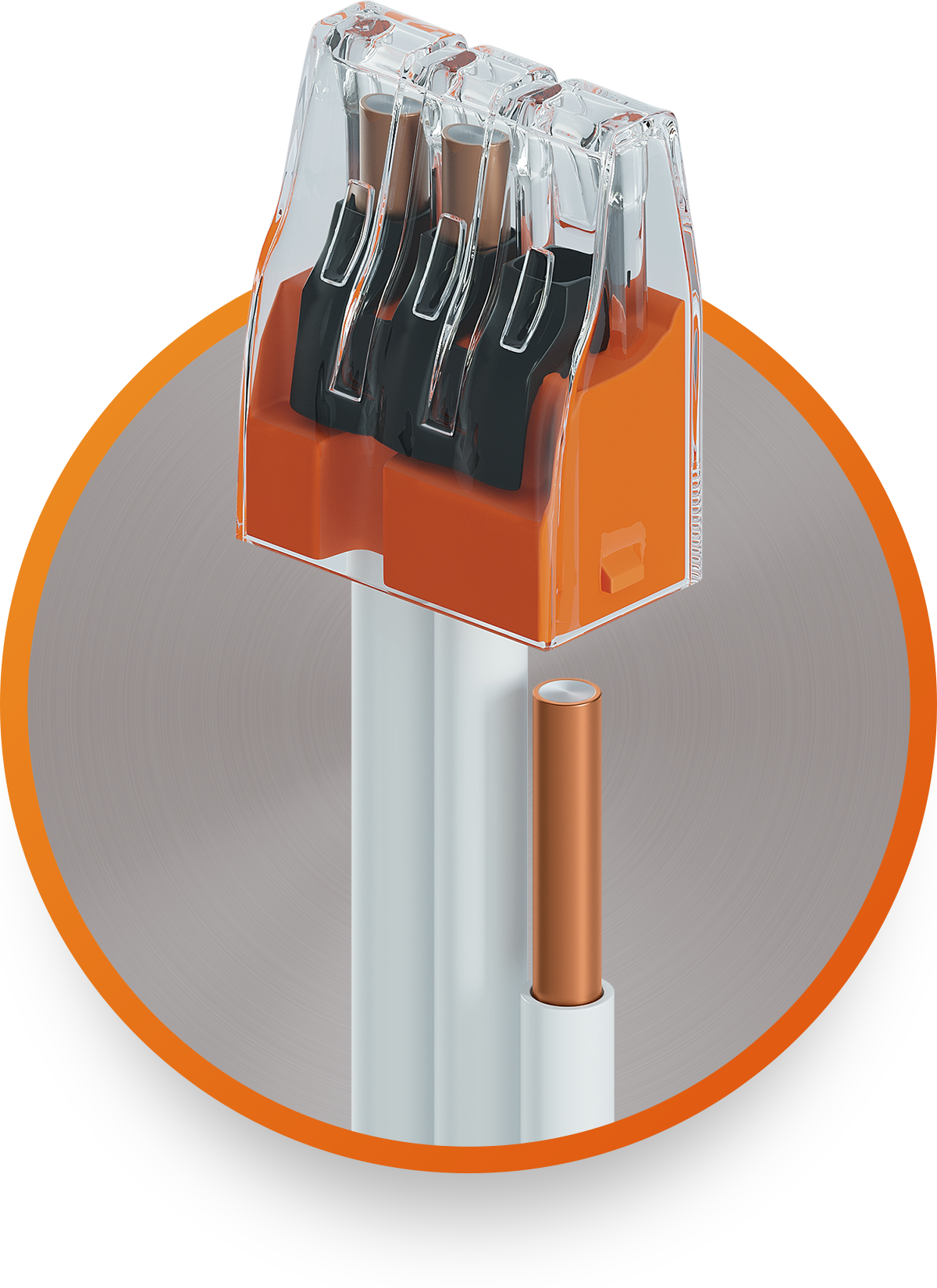
Push-in Splice Connectors

600V | Spring-action Clamp Type for Copper-Clad Aluminum (CCA)

Standards:

Listed to UL STD 486C; Certified by UL to CSA STD C22.2 #188 for Cu to Cu

Listing:

UL: E546947

Applications:

Listed for use as a spring-action clamp type wire connector on the following solid and/or stranded: Copper (CU) to Copper (CU) or Copper-Clad Aluminum (CC) to Copper-Clad Aluminum (CC) or Copper (CU) to Copper-Clad Aluminum (CC).

Building Wire Resources

Quotes and orders

Copperweld's friendly sales team is ready to fill your order or help you select products to deliver the performance you need.

Stay connected

Follow us on your favorite social platforms:

Get updates

Sign up for Copperweld news to learn about the latest industry updates, events, product releases, videos and technical documents.

Thank you! Your submission has been received!
Oops! Something went wrong. Make sure you filled out ALL the required fields and completed the reCaptcha challenge.
Our website uses cookies to improve your experience.
Our website uses cookies.