Power infrastructure, transportation networks, data systems, consumer electronics, semiconductors, EV manufacturing, industrial automation, robotics, and renewable-energy systems are all sectors that depend on a stable, reliable copper supply to sustain growth. But demand for copper is rising faster than new mines can be brought online, and ore grades continue to decline across much of the world. Long lead times, permitting challenges, and capital risk make it difficult for the mining sector to expand at the pace global growth requires.
This mismatch between rising demand and constrained supply has created pressure across the copper value chain. In this environment, it’s important to understand what role bimetals actually play. Rather than competing with copper, bimetals help copper flow toward the applications where it creates the most economic value. They ease pressure on the primary supply chain, improve market efficiency, and help stabilize the long-term investment environment that mining companies depend on.
Bimetals don’t replace copper. They improve how copper is allocated across the economy, reducing high-volume copper use while preserving copper for the roles where it is truly indispensable.
Global copper demand is being driven by a wide range of industries. Large expansions in data centers, electric vehicles, power distribution infrastructure, HVAC systems, industrial automation, and commercial construction all require substantial copper. These sectors have different growth rates, but together they form a demand profile that is both large and structurally diversified.
Mining, by contrast, faces real structural limitations. New mines often require more than a decade to permit, fund, and develop. Existing mines are working harder just to maintain output as ore grades decline. These factors are not temporary — they are permanent features of the modern copper landscape.
The result is increased pricing volatility and uncertainty. Copper becomes vulnerable to speculative cycles. Builders and manufacturers face unpredictable material costs. And mining companies must make multi-billion-dollar investment decisions in an environment where long-term demand is clear, but short-term volatility is high.
This is where bimetals provide real economic value. Understanding where copper demand can be shifted without compromising performance is the key to strengthening the entire supply chain.
Bimetallic conductors such as Copperweld® Copper-Clad Aluminum (CCA) and Copper-Clad Steel (CCS) still begin with copper. But instead of consuming copper in bulk, they apply it exactly where it delivers electrical value — on the surface of the conductor. This allows bimetals to provide the same conductive interface while using only a fraction of the copper mass.
In many applications — especially residential and commercial branch-circuit wiring — solid copper has historically been used simply because it was available, not because it was required. These applications collectively consume large volumes of copper, even though their performance needs can be fully met with bimetals.
This is where inefficient demand is created: copper is consumed in roles where solid copper’s full mass is not necessary to meet electrical or mechanical performance.
Economists call this misallocation — when a scarce, high-value material is used in applications that don’t truly require it.
Bimetals correct that misallocation. They free copper from high-volume conductor roles so it remains available for industries where copper’s performance is hardest to replace.
By shifting conductor applications to bimetals, each ton of copper mined is used more strategically. The result is a healthier copper ecosystem that better aligns real-world supply with real-world performance needs.
Copper markets become more efficient when high-volume demand is supported by bimetals. That efficiency does more than reduce unnecessary consumption — it helps stabilize the market signals that mining companies rely on.
When bimetals alleviate pressure on solid-copper demand, copper prices still reflect global growth — but sharp, destabilizing spikes become less frequent. That stability has real impact:
Mining is capital-intensive and forward-looking. Projects span decades. Investors and operators depend on stable, rational demand curves to justify new development. Bimetals help create that environment by improving the quality — not reducing the quantity — of copper demand.
In this sense, bimetals and copper mining are not adversaries. They are complementary components of a more resilient, efficient copper economy.
Copper is more than a commodity — it is the metal that underpins modern productivity. When copper becomes too scarce or too expensive, the effects ripple across the entire economy: infrastructure slows, manufacturing tightens, energy projects are delayed, and construction becomes less affordable.
By helping copper reach the applications where it creates the greatest economic value, bimetals effectively extend the reach of each ton of copper produced. That does not lessen the need for mining; it enhances mining’s impact. It makes each ton of copper more valuable by ensuring it supports the industries where it is truly irreplaceable.
A more efficient copper market is a more competitive global economy.
Copper allocation doesn’t just influence mining and materials supply — it shapes the competitiveness of the industries that anchor America’s technological leadership.
Copper saved through smarter use doesn’t just ease pressure on mining economics — it strengthens the foundation of America’s highest-growth, highest-margin industries. Sectors like semiconductors, data centers, advanced computing, robotics, medical technology, and aerospace rely on copper for precision components, power management, thermal regulation, and micro-scale conductivity. These are the industries that define modern competitiveness — and they depend on a stable, predictable copper supply.
Semiconductor manufacturing alone requires copper throughout interconnect layers, integrated circuit (IC) packaging, power delivery networks, and fabrication equipment. As the U.S. ramps up domestic chip production through historic federal investments, copper availability becomes a strategic necessity. The same is true for data centers and AI infrastructure, where high-density power distribution and thermal systems rely on copper to keep pace with explosive demand. These systems cannot risk supply disruptions caused by copper being consumed in applications that don’t require its full mass.
High-margin electronics — from smartphones and wearables to medical devices, AR/VR platforms, and high-performance computing hardware — also depend on copper-based materials across their entire manufacturing chain. These are some of the most profitable and globally influential products made in America. A shortage of copper, or volatility in copper pricing, cascades directly into production delays, higher costs, and reduced competitiveness.
Smarter copper allocation ensures that copper isn’t locked up in bulk, high-volume uses where bimetals can provide identical performance. This is exactly the role that bimetallic solutions like Copperweld® CCA and CCS conductors play — reserving copper for the manufacturing systems that deliver the most economic value, the industries that sit at the heart of American innovation, export strength, and long-term industrial leadership.
While the economic benefits of smarter copper allocation begin on the supply side — where mining companies produce copper — those benefits become most visible in the sectors that consume the most copper.
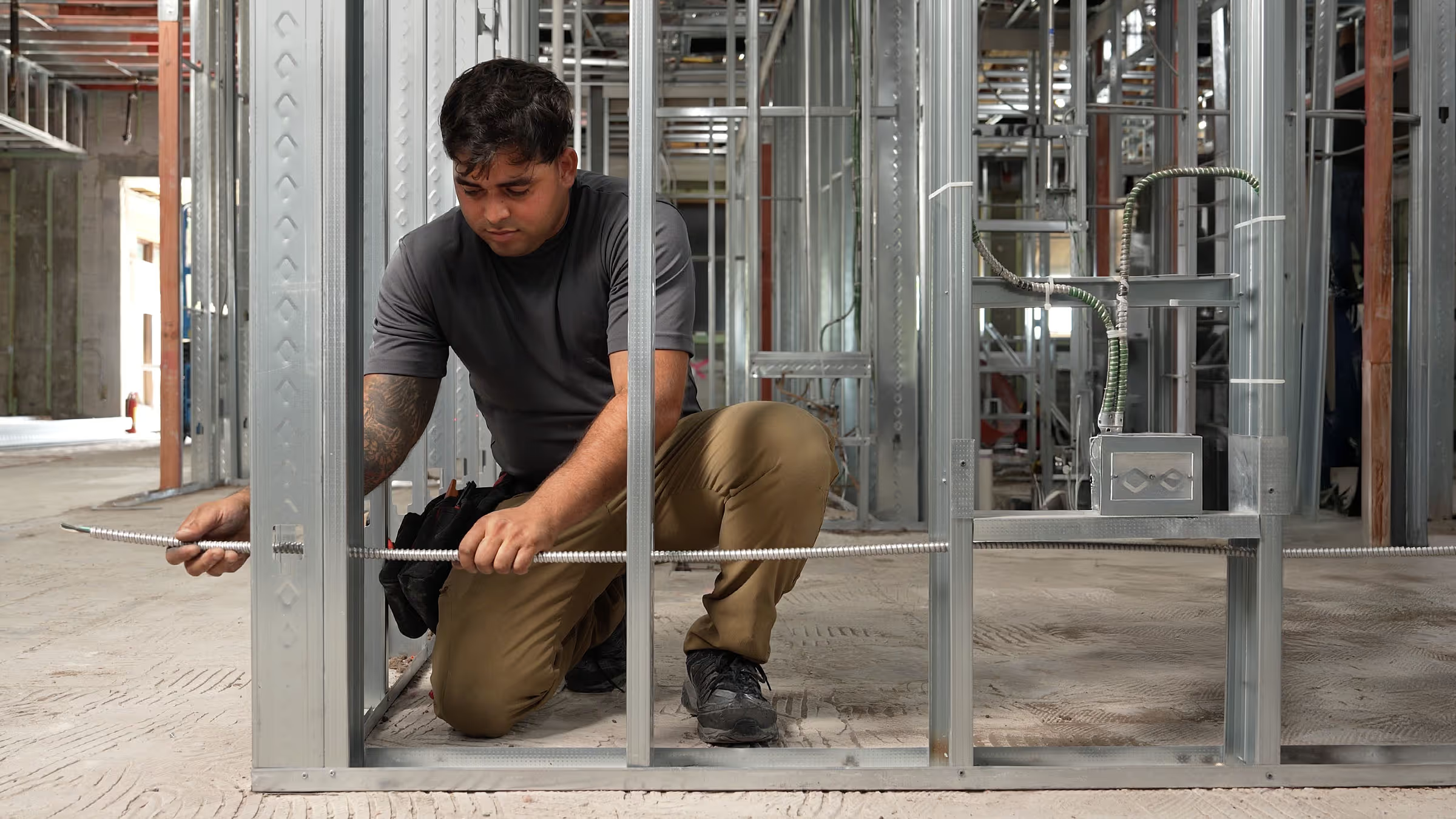
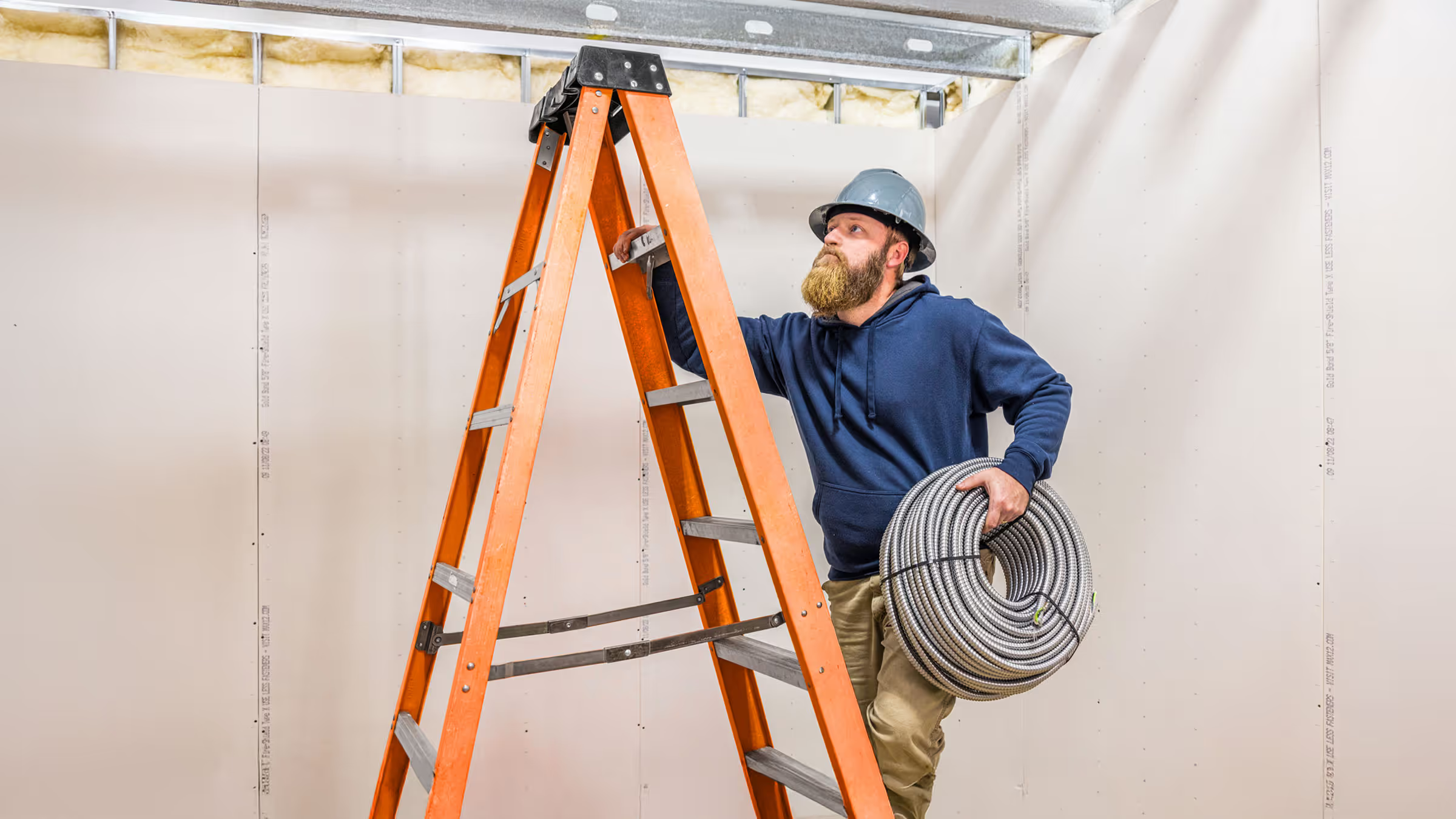
Construction is a major driver of global copper demand. Electrical wiring, grounding systems, building power distribution, and large mechanical systems all rely heavily on copper-based products. When copper markets stabilize, builders face fewer price swings, fewer bidding surprises, and more predictable project budgets.
Because construction consumes such a large share of the world’s copper, even modest reductions in copper use can improve material availability across the entire supply chain.
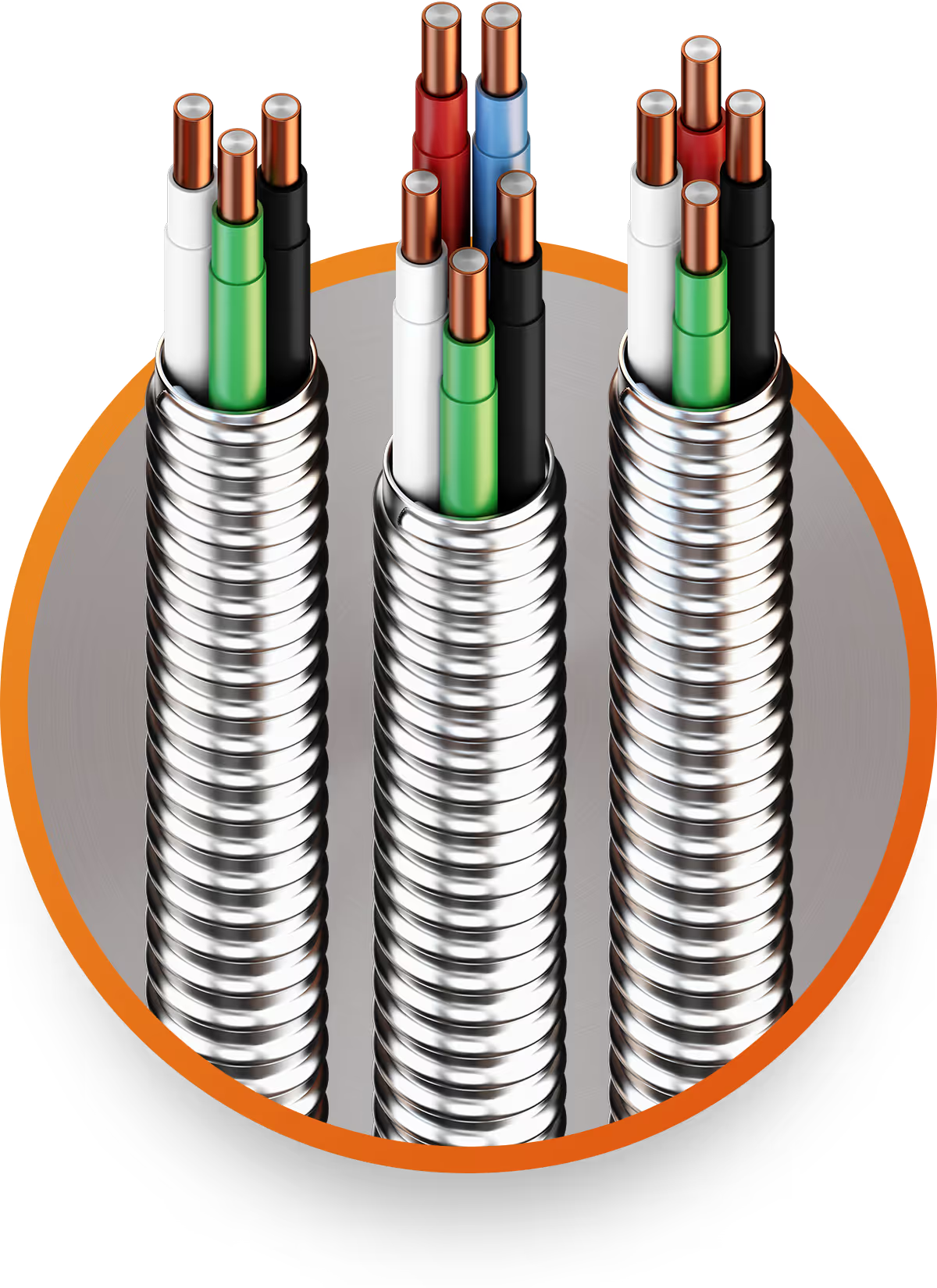
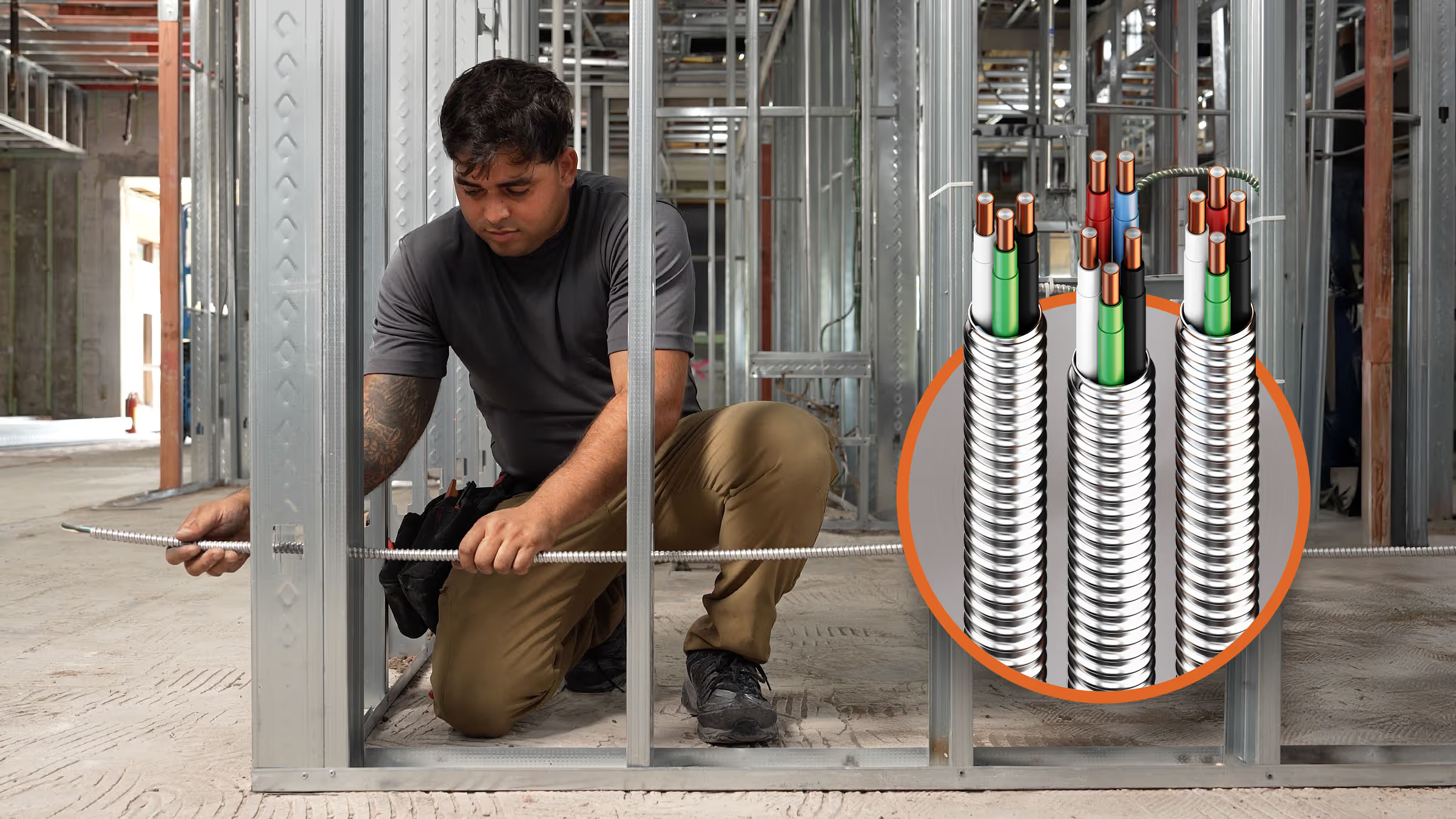
By reducing copper use in high-volume electrical conductors, Copperweld® CCA Building Wire frees up more copper for the applications where its properties are hardest to replace.
Utilities and grid developers also consume copper at scale. Substation upgrades, grounding networks, and storm-hardening projects all require substantial copper tonnage. A more efficient copper market supports long-range planning for these essential infrastructure investments.
In these environments, Copperweld’s Century®, ArcAngel®, and Stingray® CCS conductors deliver the strength, corrosion performance, and electrical reliability utilities expect — while using far less copper than solid copper equivalents.
These are sectors where copper consumption is highly concentrated — and where smarter material allocation has some of the greatest potential to reduce unnecessary demand.
Bimetals play a constructive role in the copper ecosystem. They improve how copper is allocated across the economy, ensuring more of it reaches the applications where solid copper is essential.
Bimetallic conductors help reduce inefficient consumption in high-volume applications while preserving copper for the industries where its performance is irreplaceable. This supports more stable copper markets, healthier mining economics, and a more resilient global supply chain.
For more than 100 years, Copperweld has engineered conductors that use copper efficiently while enhancing mechanical and electrical performance. That mission — maximizing the value and impact of copper through thoughtful design — is more relevant today than ever before. As the world asks more of copper, bimetals help ensure that every ton of it goes further, does more, and supports the sectors that depend on it most.
Copper’s future is stronger — and more resilient — when bimetals are part of the picture.


Copperweld's friendly sales team is ready to fill your order or help you select products to deliver the performance you need.
Follow us on your favorite social platforms:





Sign up for Copperweld news to learn about the latest industry updates, events, product releases, videos and technical documents.
Lorem ipsum dolor sit amet, consectetur adipiscing elit, sed do eiusmod tempor incididunt ut labore et dolore magna aliqua. Ut enim ad minim veniam, quis nostrud exercitation ullamco laboris nisi ut aliquip ex ea commodo consequat. Duis aute irure dolor in reprehenderit in voluptate velit esse cillum dolore eu fugiat nulla pariatur.
Copperweld's friendly sales team is ready to fill your order or help you select products to deliver the performance you need.
Follow us on your favorite social platforms:
Sign up for Copperweld news to learn about the latest industry updates, events, product releases, videos and technical documents.