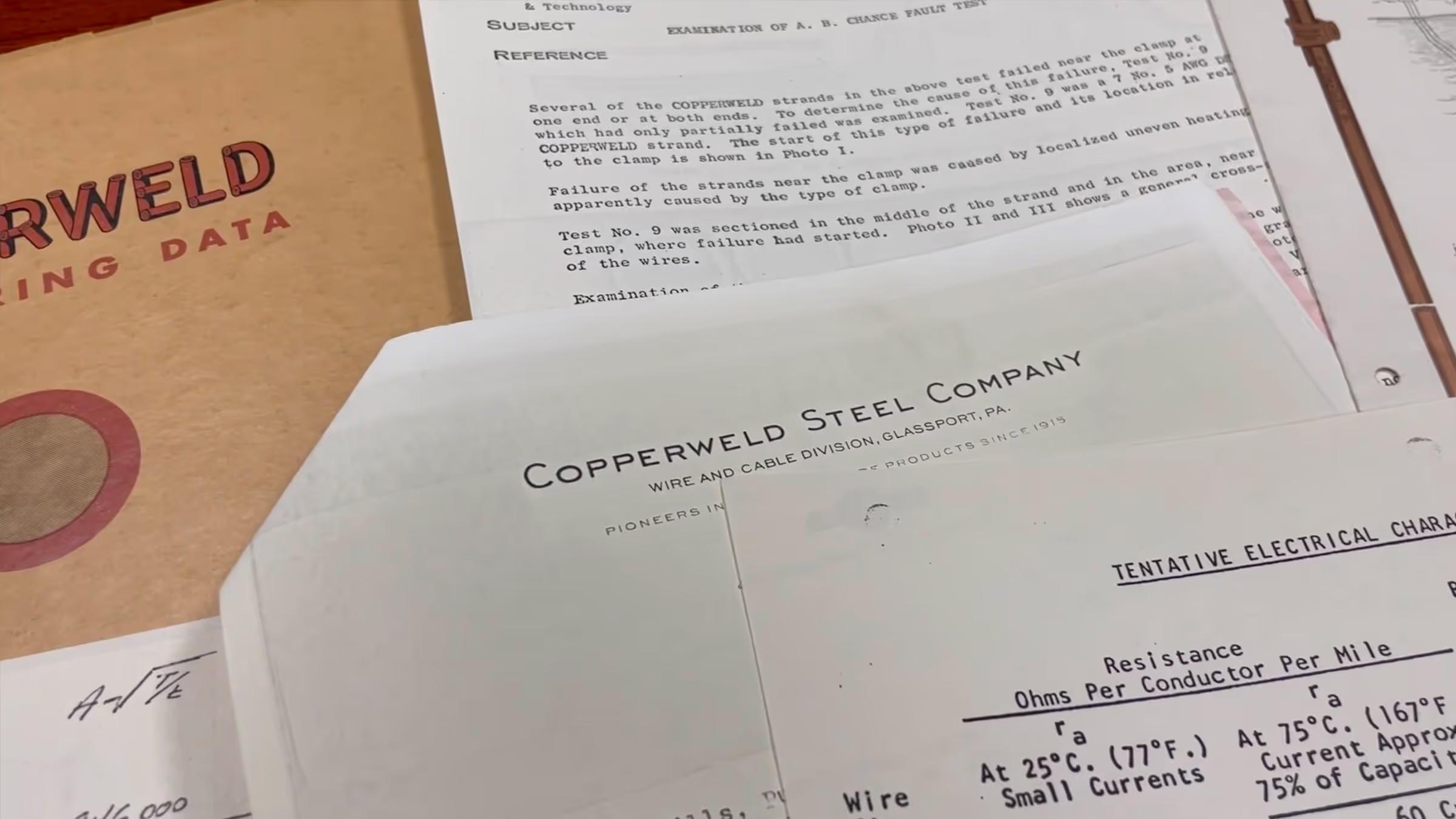

While reviewing Copperweld's engineering archives, researchers uncovered historical short-circuit testing dating back to 1971 that documented the performance of Copper-Clad Steel (CCS) grounding conductors under high-current fault conditions.
Although predictive formulas and conductor performance tables had been published for years, much of the supporting laboratory methodology and empirical testing remained largely confined to archived reports. As industry design practices evolved and analytical models changed over time, those original test results became an important opportunity to revisit foundational engineering assumptions.
This installment follows Copperweld's effort to validate that historical work using modern laboratory testing. By comparing newly generated data with the original empirical results, engineers confirmed important aspects of CCS conductor performance while expanding the body of knowledge available to the engineering community. Revisiting decades-old research ultimately became one of the most important steps in moving the project forward.
Historical data established a reliable foundation, but understanding grounding conductor performance required examining how conductors behave as they approach their limits during high-current fault events.

Copperweld's friendly sales team is ready to fill your order or help you select products to deliver the performance you need.
Follow us on your favorite social platforms:





Sign up for Copperweld news to learn about the latest industry updates, events, product releases, videos and technical documents.
Lorem ipsum dolor sit amet, consectetur adipiscing elit, sed do eiusmod tempor incididunt ut labore et dolore magna aliqua. Ut enim ad minim veniam, quis nostrud exercitation ullamco laboris nisi ut aliquip ex ea commodo consequat. Duis aute irure dolor in reprehenderit in voluptate velit esse cillum dolore eu fugiat nulla pariatur.
Copperweld's friendly sales team is ready to fill your order or help you select products to deliver the performance you need.
Follow us on your favorite social platforms:
Sign up for Copperweld news to learn about the latest industry updates, events, product releases, videos and technical documents.