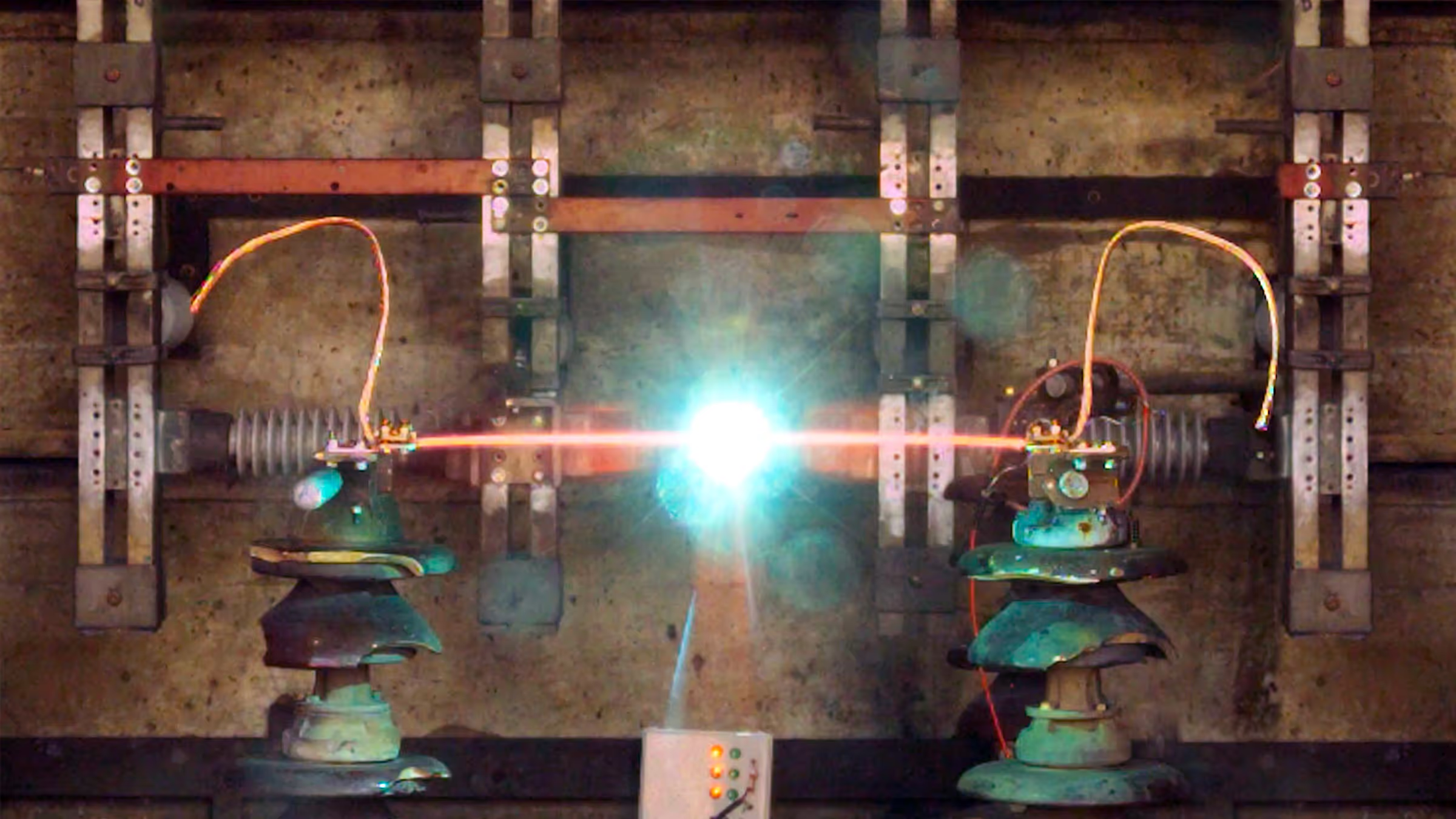

When a high-current fault does happen, conductor performance depends on far more than a single published value. Understanding those limits requires carefully controlled destructive testing that reveals how conductors behave as they approach failure.
This video explores Copperweld's approach to evaluating short-circuit performance by establishing a baseline, testing multiple conductor samples, and recognizing that performance naturally exists within a range rather than at one precise point. Manufacturing tolerances, material variation, and testing conditions all contribute to that range, making empirical testing an essential complement to theoretical calculations.
Rather than focusing solely on the point where a conductor ultimately fuses, the research examines performance throughout the entire operating range. This broader understanding provides engineers with valuable insight into conductor behavior and creates a stronger technical foundation for future product development.
With a better understanding of conductor behavior established, the next step was to identify the benchmark against which every future design would be measured.

Copperweld's friendly sales team is ready to fill your order or help you select products to deliver the performance you need.
Follow us on your favorite social platforms:





Sign up for Copperweld news to learn about the latest industry updates, events, product releases, videos and technical documents.
Lorem ipsum dolor sit amet, consectetur adipiscing elit, sed do eiusmod tempor incididunt ut labore et dolore magna aliqua. Ut enim ad minim veniam, quis nostrud exercitation ullamco laboris nisi ut aliquip ex ea commodo consequat. Duis aute irure dolor in reprehenderit in voluptate velit esse cillum dolore eu fugiat nulla pariatur.
Copperweld's friendly sales team is ready to fill your order or help you select products to deliver the performance you need.
Follow us on your favorite social platforms:
Sign up for Copperweld news to learn about the latest industry updates, events, product releases, videos and technical documents.