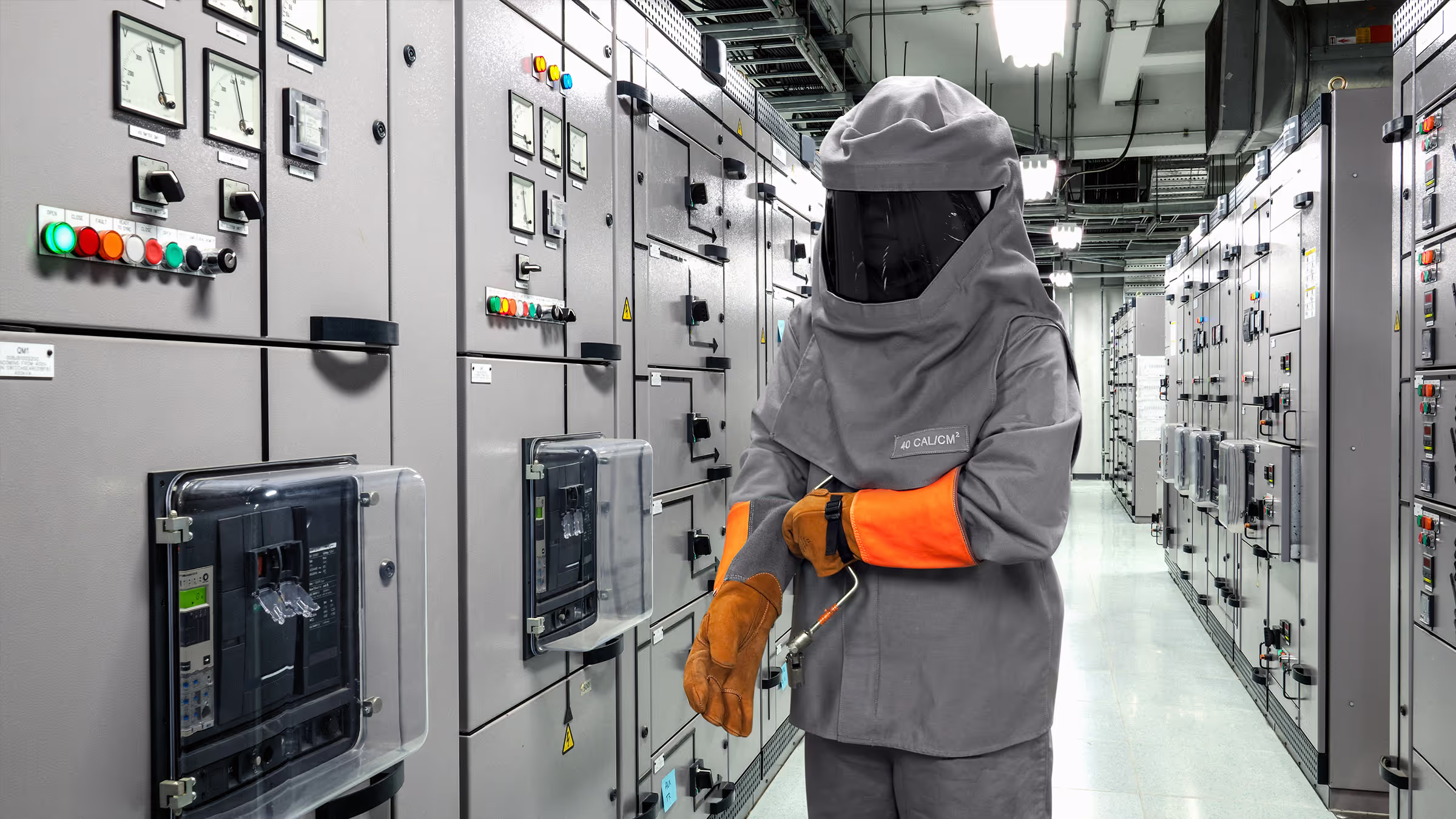

Copperweld begins each major short-circuit testing program by evaluating copper conductors under controlled laboratory conditions to establish a reliable performance baseline. Understanding how copper behaves as fault current approaches its fusing limit provides valuable context for comparing alternative conductor materials and identifying meaningful differences in performance. The testing also demonstrates the significant amount of incident energy released when copper reaches its failure point, creating an important benchmark for evaluating other conductor designs.
With a clear baseline established, Copperweld engineers could begin asking a new question: Could a different conductor architecture provide the electrical performance required for modern substations while improving other critical characteristics such as strength, flexibility, and long-term durability? That question would shape the next phase of the engineering journey.
The research had established a solid scientific foundation. Now it was time to transform those discoveries into an entirely new generation of grounding conductor design.

Copperweld's friendly sales team is ready to fill your order or help you select products to deliver the performance you need.
Follow us on your favorite social platforms:





Sign up for Copperweld news to learn about the latest industry updates, events, product releases, videos and technical documents.
Lorem ipsum dolor sit amet, consectetur adipiscing elit, sed do eiusmod tempor incididunt ut labore et dolore magna aliqua. Ut enim ad minim veniam, quis nostrud exercitation ullamco laboris nisi ut aliquip ex ea commodo consequat. Duis aute irure dolor in reprehenderit in voluptate velit esse cillum dolore eu fugiat nulla pariatur.
Copperweld's friendly sales team is ready to fill your order or help you select products to deliver the performance you need.
Follow us on your favorite social platforms:
Sign up for Copperweld news to learn about the latest industry updates, events, product releases, videos and technical documents.