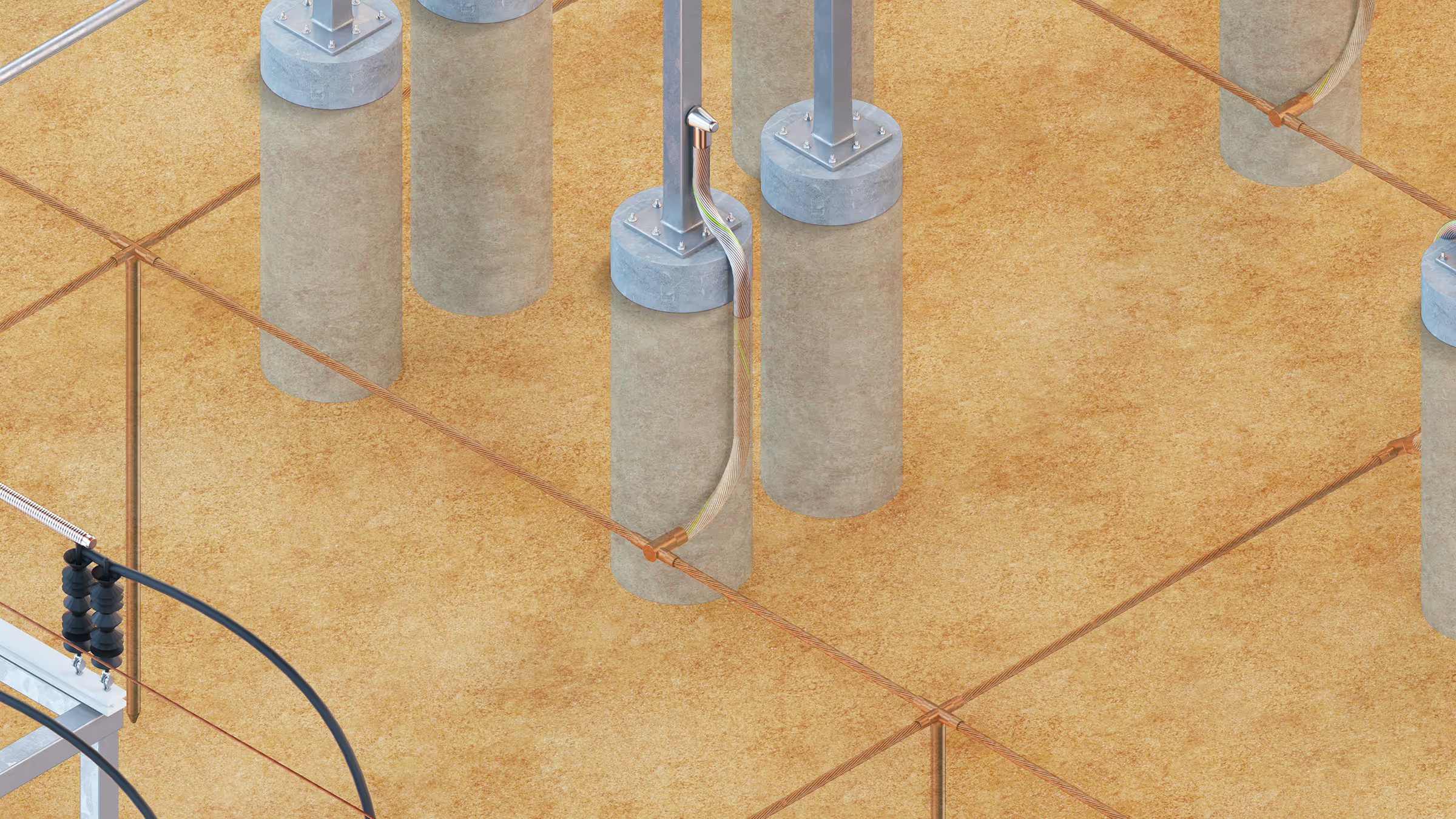

Yet electrical performance is only one part of the equation. A grounding conductor must also withstand decades of mechanical stress, environmental exposure, installation demands, and the physical realities of life beneath the surface.
In this opening installment of The Substation Grounding Series, Copperweld explores the engineering considerations that shape grounding conductor selection. IEEE Std 80 identifies four primary requirements for grounding conductors, but only one relates directly to carrying fault current. The remaining requirements focus on mechanical durability, long-term reliability, and the ability to withstand physical abuse throughout the conductor's service life. These principles challenge engineers to think beyond conductivity alone and consider how grounding systems perform over decades of operation.
Those questions became the starting point for a broader engineering investigation. Rather than asking how to improve a single conductor characteristic, Copperweld began exploring how grounding conductors could be optimized across multiple performance requirements to better serve modern substations.
Understanding the engineering challenge was only the beginning. Before new ideas could be evaluated, Copperweld first needed confidence that decades-old laboratory testing could be reliably reproduced using modern equipment.

Copperweld's friendly sales team is ready to fill your order or help you select products to deliver the performance you need.
Follow us on your favorite social platforms:





Sign up for Copperweld news to learn about the latest industry updates, events, product releases, videos and technical documents.
Lorem ipsum dolor sit amet, consectetur adipiscing elit, sed do eiusmod tempor incididunt ut labore et dolore magna aliqua. Ut enim ad minim veniam, quis nostrud exercitation ullamco laboris nisi ut aliquip ex ea commodo consequat. Duis aute irure dolor in reprehenderit in voluptate velit esse cillum dolore eu fugiat nulla pariatur.
Copperweld's friendly sales team is ready to fill your order or help you select products to deliver the performance you need.
Follow us on your favorite social platforms:
Sign up for Copperweld news to learn about the latest industry updates, events, product releases, videos and technical documents.